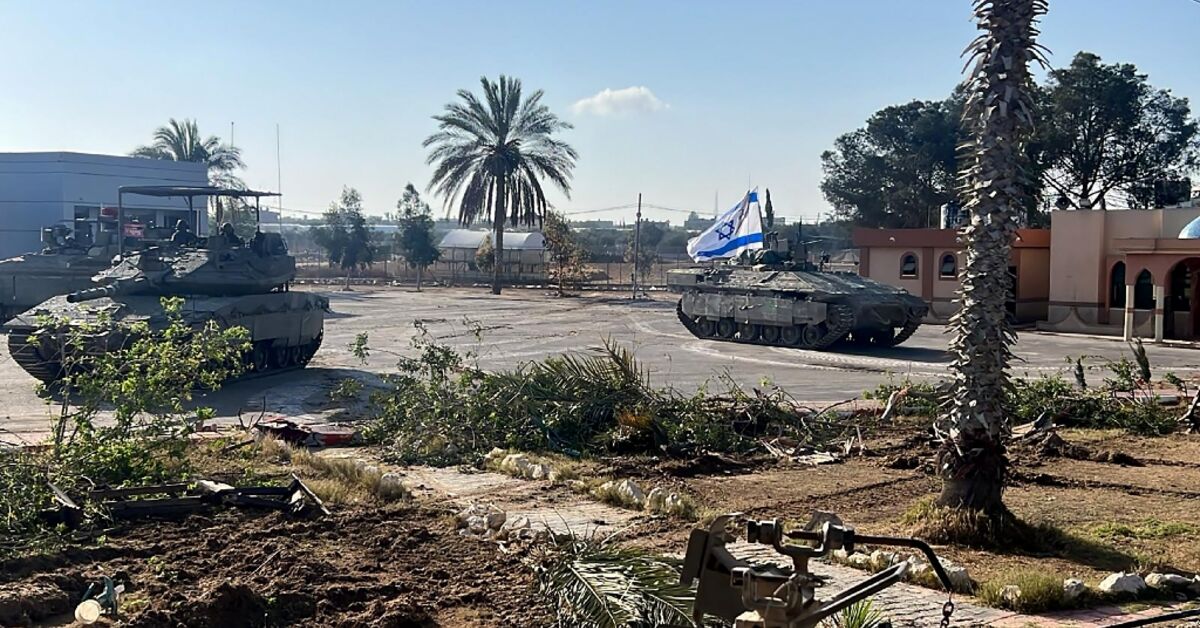

The Israeli military took control of the Rafah border crossing between the Gaza Strip and Egypt, less than one day after the Palestinian militant group Hamas said it accepts an Egyptian-Qatari cease-fire proposal to halt the seven-month war with Israel.
Wael Abu Omar, a spokesman for the Palestinian Crossings Authority, confirmed Tuesday to the Associated Press the Israeli takeover of the crossing, saying the facility is now closed.
This comes ater Hamas issued a statement late on Monday saying its leader, Ismail Haniyeh, delivered the news about accepting the Egypt-Qatar cease-fire proposal in a phone call with Qatari Prime Minister Mohammed Bin Abdulrahman Al Thani and Egyptian Intelligence Chief Abbas Kamel.
Meanwhile, a Qatari delegation will be heading to Cairo on Tuesday to resume the indirect negotiations between Israel and Hamas on the cease-fire. Israel is also sending a delegation to the Egyptian capital in an attempt to reach an agreement.
Israeli military enters eastern Rafah, controls Rafah crossing
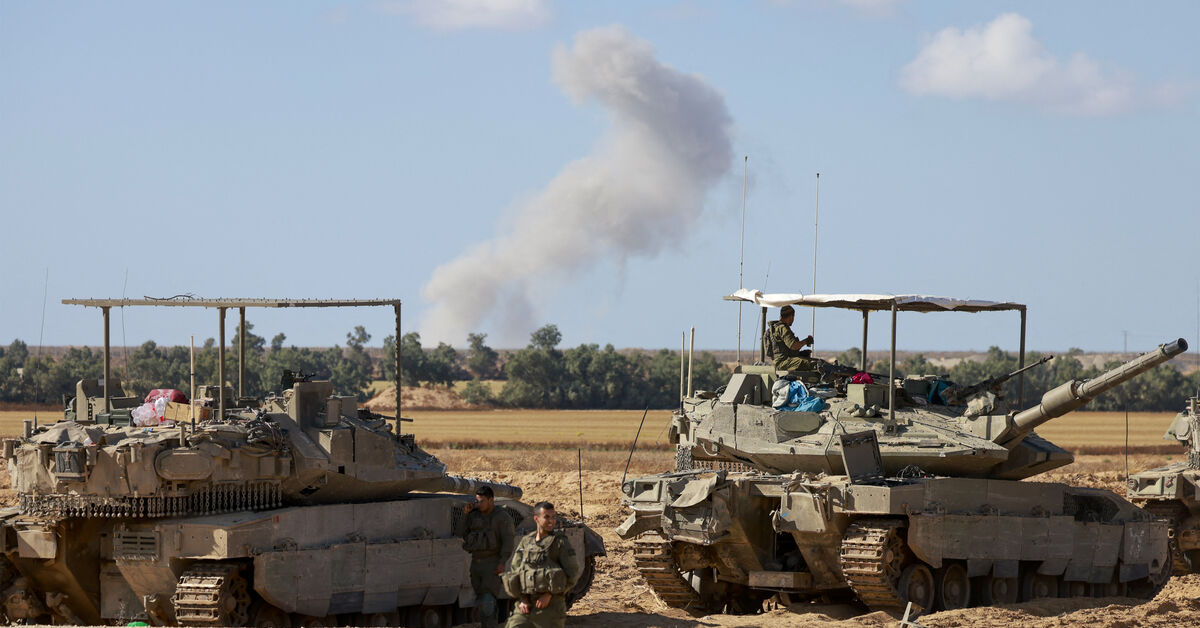
The Israeli military confirmed Tuesday morning that its troops entered overnight the eastern Rafah region and took control of the Rafah crossing on the border of Gaza with Egypt. So far, it said, it attacked more than 150 targets and took control of the Rafah crossing Gaza side. 20 Palestinians were killed overnight and three tunnel shafts located. The military added that a vehicle carrying explosive drove towards troops, but was destroyed before exploding.
The official Palestinian WAFA news agency also reported the closure of the crossing, saying the movement of people and aid has stopped.
The UN refugee agency, UNRWA, warned in a post on X that the disruption of the Rafah crossing “will halt the critical humanitarian response across the Gaza Strip.”
Further disruptions to aid delivery were registered late Monday night on one of Israel’s main highways where activists attempted to blocks trucks transporting humanitarian aid from entering the Gaza Strip, claiming no assistance should be delivered as long as the hostages are not receiving visits of the Red Cross. Six people were detained by Israeli police during the demonstrations.
’42-day cease-fire’
Initially, Ynet reported Monday, citing unnamed Israeli officials, that Hamas did not accept the original cease-fire proposal, but rather one that was modified by the Egyptians. According to these officials, “The Egyptians unilaterally flexed all the parameters so that Hamas would agree. This was done unilaterally, and this proposal is not acceptable to Israel.”
But the Israeli government said later on Monday that it is studying the proposal and will send a delegation to Cairo to discuss its details.
The statement added that even though the cease-fire terms Hamas agreed to stop short of Israel’s requirements, Israel will send a delegation of mediators “to fully exhaust the possibility of reaching an agreement under terms acceptable to Israel.”
Senior Hamas official Khalil al-Haya told Al Jazeera that the deal agreed to by the group included a 42-day cease-fire in the first stage, which would include the release of women, female soldiers, elderly and sick. For each civilian released, Israel will release Palestinian prisoners who are minors, women and elderly, though it’s unclear how many would be released. Under the deal, every week three hostages would be released; the original proposal agreed to by Israel stated that three hostages would be released every three days in the first phase.
Israel’s war cabinet conducted a phone consultation late Monday night to discuss the latest developments, Israeli media reported. After the phone call, Prime Minister Benjamin Netanyahu’s office said in a statement, “The war cabinet decided unanimously that Israel will continue with its action in Rafah to pressure Hamas militarily in order to advance the release of our hostages and the other goals of the war.”
US negotiator in Middle East
The news comes as the Biden administration makes a last-ditch effort to avoid a Rafah invasion. CIA Director Bill Burns remains in the region for cease-fire negotiations, conducting shuttle diplomacy between Egypt, Qatar and Israel.
State Department spokesperson Matthew Miller told reporters Monday that the United States was reviewing Hamas’ response and would be discussing it with Egypt, Qatar and Israel over the coming hours.
Miller declined to characterize the nature of the Hamas response, but he said Burns was “in the region working on this in real time.”
National Security Council spokesman John Kirby told reporters Monday, “We are at a critical stage right now. We got a response from Hamas. Director Burns is working through that, trying to assess it, working with the Israelis. I don’t know if it gets any more sensitive than right now.”
Asked about evacuation of some Palestinians from Rafah today in preparation for an expected operation there, Kirby said, “We don’t want it to see operations in and around Rafah that make it harder for the people seeking refuge there and shelter, to be safe and secure.”
Palestinians jubilating
Footage circulating on social media showed Palestinians in Rafah rejoicing in the streets after Hamas’ announcement on Monday. Meanwhile, hundreds of demonstrators gathered Monday evening near the Defense Ministry in Tel Aviv, calling for the government to accept a truce deal with Hamas. Several demonstrators were seen lying on the roads to block traffic, refusing police instructions to evacuate the intersection.
Turkish President Recep Tayyip Erdogan welcomed the announcement. “We were pleased to hear Hamas’ announcement that it accepted the cease-fire in line with our advice. Now, the same step should be taken on the Israeli side. I call on all Western actors to put pressure on the Israeli administration.”
Erdogan wrote in a post on X that he had discussed the deal with Haniyeh on the phone on Monday. Beirut-based Al-Mayadeen reported that Haniyeh also spoke on the phone with Iranian Foreign Minister Hossein Amir-Abdollahian, while Reuters reported that the Hamas leader also spoke to the emir of Qatar, Sheikh Tamim bin Hamad Al Thani.
The Egyptian and Qatari governments did not immediately respond to Hamas’ statement. Earlier on Monday, the Egyptian Foreign Ministry said in a statement that it “warns against the dangers” of an Israeli operation in Rafah.
Saudi Arabia decries ‘genocide’ in Gaza
The Saudi Foreign Ministry issued a warning on Monday against a potential Rafah operation, slamming what it described as Israel’s “genocide” in Gaza.
“The Ministry renewed the Kingdom’s demand for the international community to intervene immediately to stop the genocide carried out by the occupation forces (Israeli) against defenseless civilians in the occupied Palestinian territories,” the ministry said in a statement.
Israel steps up Rafah plans
But even with some momentum behind cease-fire talks, the Israeli military said at 10:18 p.m. local time that it conducted strikes against Hamas targets in eastern Rafah.
The Hamas-affiliated Safa news agency reported an Israeli air raid in central Khan Yunis at 9:38 p.m. local time. The city is located north of Rafah.
It also reported Israeli air raids in the al-Tanur and al-Janina neighborhoods east of Rafah, as well as Israeli artillery fire in the area.
President Joe Biden spoke to Israeli Prime Minister Benjamin Netanyahu on the phone Monday and reiterated the United States’ opposition to an Israeli offensive in Rafah where 1.4 million Palestinians are sheltering.
Earlier Monday, the Israeli military ordered the evacuation of 100,000 Palestinians in eastern Rafah ahead of a potential offensive in the southern Gazan city.
On April 27, Hamas received an Egyptian-mediated outline for a new deal for a cease-fire in Gaza and the release of hostages, based on proposals made by Israel. The three-phase proposal includes the release of 33 hostages in exchange for the release of hundreds of Palestinian prisoners incarcerated in Israel, the return of displaced Gazans to the north of the strip, and the withdrawal of the Israeli military from urban areas in Gaza along with discussions on a long period of calm.
Over the weekend, Hamas fired some 14 rockets from Rafah toward the Israeli Kerem Shalom crossing, killing four Israeli soldiers, in what was considered by Israel as a signal by the group that it is not interested in the deal.
This a breaking story and will be updated.