
BEIRUT — An Israeli airstrike on Friday at dawn hit a residential compound housing media personnel in the town of Hasbaya, in southeastern Lebanon, killing at least three journalists and injuring three others, in the latest violence against press workers in the country since the start of Israeli-Hezbollah cross-border hostilities last year.
The Beirut-based Al-Mayadeen channel, politically close to Hezbollah, said early on Friday that its cameraman Ghassan Najjar and its broadcast engineer Mohammad Rida were among those killed.
The third journalist was a cameraman working for Hezbollah’s official Al-Manar channel, whom it identified as Wissam Qassem.
Mohammed Farhat, a reporter for the local Al-Jadeed channel, said two strikes hit the complex where 16 journalists from several local, regional and international media outlets covering the war in the south were present. Reporting from the targeted site, Farhat said the journalists had rented the complex in Hasbaya after moving from the town of Ibl al-Saqi, in the southern district of Marjayoun, following threats from the Israeli army and its expansion of strikes.
Hasbaya, about 60 kilometers north of the border with Israel, had so far been spared much of the fighting.
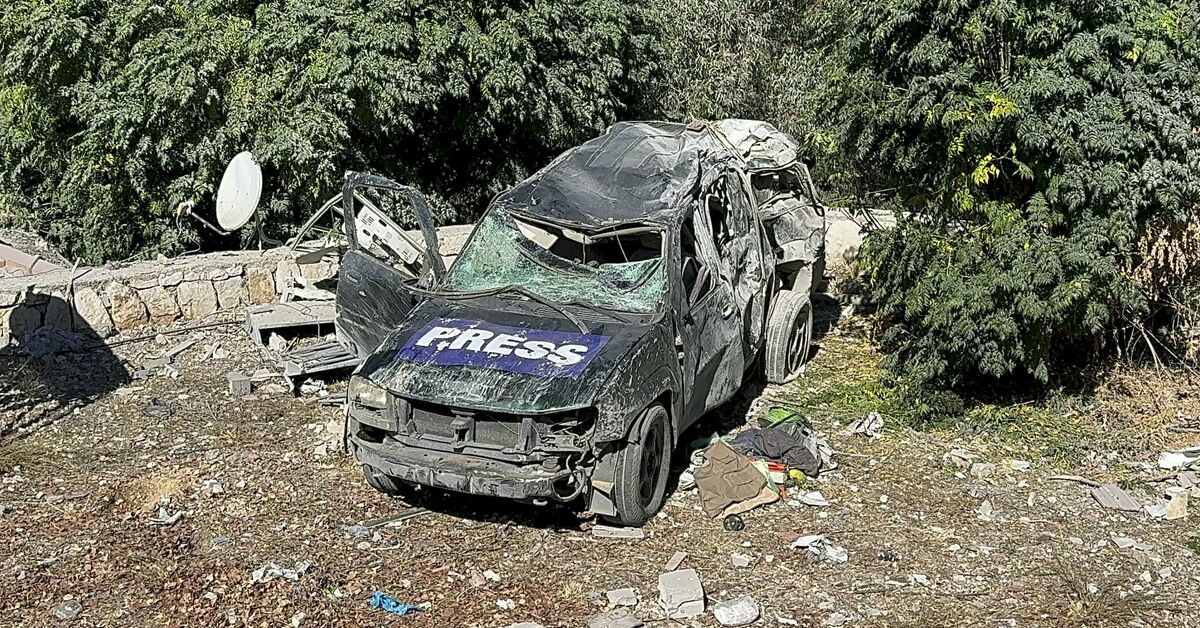
Farhat, who toured the rubble- and dust-strewn site, reported seeing mangled vehicles with “Press” signs still clearly displayed.
The Israeli army has not yet commented on the attack.
من حاصبيا في جنوب لبنان، حيث مكان إقامة الصحافيين الذي تعرض للقصف.. مراسل الجديد ينقل المشهد @farhat_muhamad1 pic.twitter.com/rD7P6QGQ1t
— Al Jadeed News (@ALJADEEDNEWS) October 25, 2024
The Lebanese Press Editors Syndicate strongly condemned the “horrific massacre” carried out by Israel against journalists in Hasbaya.
In a statement on Friday, the syndicate said the attack amounted to a “war crime” and called on the international community and concerned actors to take action against Israel over its “assault” on press workers.
Similarly, the Lebanon Press Club, a local nonprofit media platform, denounced the attack as a “crime.” The club added in a statement that an international campaign must be launched to reject Israeli attacks against media workers and stand by journalists in Lebanon.
The latest attack brings the total number of journalists killed in Lebanon since last October to six. In November 2023, an Israeli airstrike killed Al-Mayadeen correspondent Farah Omar and cameraman Rabih Mehmari when it struck a press crew in the border town of Tair Harfa.
An Israeli strike lightly wounded an Al Jazeera photographer in mid-November as dozens of reporters from several media outlets covered the Israeli-Hezbollah violence in the border town of Yarun.
Earlier in December, Reuters photojournalist Issam Abdallah was killed in an Israeli strike in the southern village of Alma al-Shaab, near the border.
BREAKING: Israel kills journalists after targeting their hotel in Hasbaya, southern Lebanon.
Al-Mayadeen broadcast engineer Mohammad Reda, photographer Ghassan Najjar and Al-Manar TV photographer Wissam Qassem were killed in what seems to be a deliberate strike.
“We hold the… pic.twitter.com/8QExUMot49
— Steve Sweeney (@SweeneySteve) October 25, 2024
On Oct. 11, Reporters Without Borders (RSF) issued an urgent appeal for the protection of journalists in Lebanon.
“As these media professionals watch the worst-case scenario unfold before their eyes — a full-scale war between Israel and Hezbollah — impunity for the crimes against journalists committed by the Israeli army continues to threaten the entire profession,” the Paris-based organization said in a statement.
RSF added that press workers covering the war in Lebanon have also been subjected to threats and intimidation from the Israeli army in the past year. It mentioned Amal Khalil, a correspondent for the Lebanese Al-Akhbar daily.
Khalil received death threats last month from an Israeli telephone number. She told Al-Jadeed on Sept. 13 that the text message read, “We know where you are and we will reach you when the time comes.”
Khalil was further warned, “I suggest you flee to Qatar or somewhere else if you want to keep your head connected to your shoulders.”
Friday’s airstrike comes after Al-Mayadeen’s office in the Lebanese capital, Beirut, was hit by aerial attack on Wednesday. The channel had evacuated the building at the start of hostilities last year in October.
Israel intensified airstrikes across Lebanon last month as part of its campaign against Hezbollah, a year after cross-border hostilities erupted following Hamas’ Oct. 7 incursion into southern Israel. The year-long war has killed more than 2,500 Lebanese, including children, women, and paramedics, and injured over 12,000 others, according to the Lebanese Health Ministry.
In Israel, more than 54 people have been killed in rocket attacks since last October, according to Israeli authorities, nearly half of them soldiers.