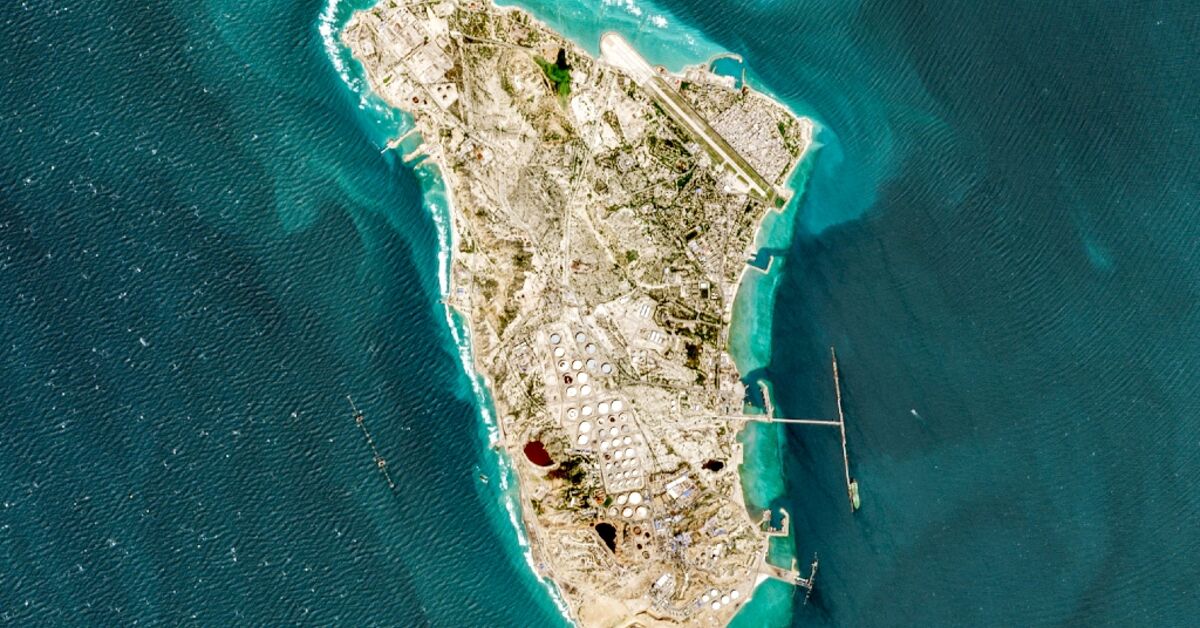
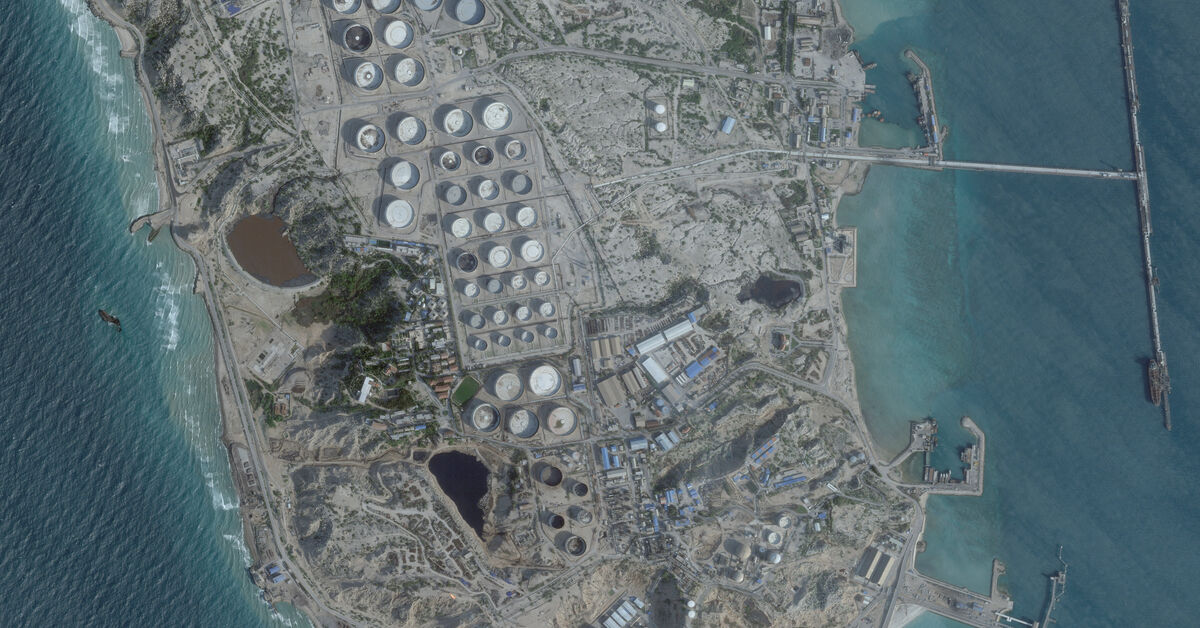

March 14 (Reuters) – Kharg Island, where U.S. forces on Friday destroyed military targets, is the hub for 90% of Iran’s oil exports and has long been seen as a key vulnerability that would provoke a severe response by Tehran if attacked.
President Donald Trump said on social media that the U.S. “totally obliterated every MILITARY target” on Kharg and threatened that oil infrastructure could be targeted if Iran continues to interfere with shipping in the Strait of Hormuz.
Iran, which ramped up oil output in the run-up to the February 28 launch of the war by Israel and the U.S., has continued to ship oil at a rate of 1.1 million to 1.5 million barrels per day, TankerTracker.com and Kpler data show.
Markets were watching for any sign that the strikes had damaged Kharg’s intricate network of pipelines, terminals and storage tanks. Even minor disruptions could further tighten global supply, adding pressure to an already volatile market.
“You take out Kharg infrastructure, then you take 2 million bpd out of the market for good – not until the Straits get fixed,” said Dan Pickering, chief investment officer for Pickering Energy Partners.
Iran’s armed forces said Saturday that any attack on Iran’s oil and energy infrastructure will lead to attacks on energy infrastructure owned by oil companies cooperating with the U.S. in the region, Iranian media reported.
“I’m very concerned it elevates the temperature and Iran has less to lose and it seems to escalate. Iran when backed into a corner is highly emboldened to act,” said Patrick De Haan, an analyst with U.S. fuel price tracker GasBuddy.
Iran has all but shut shipping through the Strait of Hormuz, through which 20% of global oil flows, mostly to Asia.
KEY SUPPLY SOURCE FOR CHINA
Kharg sits 16 miles (26 km) from Iran’s coast, about 300 miles (483 km) northwest of the Strait of Hormuz, in waters deep enough to enable the docking of tankers that are too large to approach the mainland’s shallow coastal waters.
Much of the oil shipped from Iran via Kharg goes to China, the top global crude importer, which has been taking measures including banning refined fuel exports to preserve supplies amid disruption in the Middle East.
Iranian oil accounts for 11.6% of China’s seaborne imports so far this year, according to tanker tracker Kpler, and is mostly bought by independent refiners attracted by what had been deeply discounted prices due to U.S. sanctions on Tehran.
Iran has exported 1.7 million bpd crude so far this year, of which 1.55 million bpd was shipped via Kharg, Kpler data shows.
Prior to the war, Iran had ramped up exports to about 2.17 million bpd in February, Kpler data showed. It shipped a record 3.79 million bpd in the week of February 16, the data showed.
Kharg has storage capacity of roughly 30 million barrels, and held about 18 million barrels of crude as of early March, according to a JP Morgan report citing Kpler data.
Multiple very large crude oil tankers were loading at Kharg on Wednesday, according to satellite imagery reviewed by TankerTrackers.com.
Iran is the third-largest OPEC producer, pumping about 4.5% of global oil supplies. Iran’s output is about 3.3 million bpd of crude, plus 1.3 million bpd of condensate and other liquids.
(Reporting by Tony Munroe, Liz Hampton and Siyi Liu; Editing by Stephen Coates)