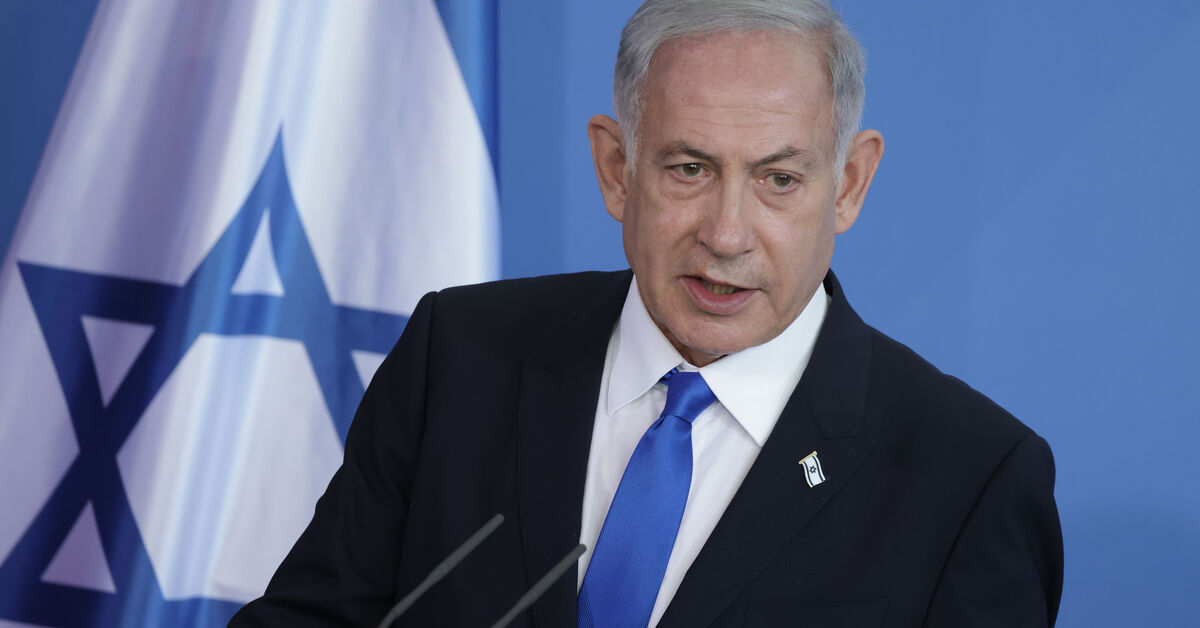

Prime Minister Benjamin Netanyahu’s office agreed to send a delegation of top Israeli officials to Washington to discuss a possible military operation in Rafah, in a reversal of his decision earlier this week to cancel the group’s visit, White House Press Secretary Karine Jean-Pierre confirmed on Wednesday.
Jean-Pierre said the White House is working with Netanyahu’s office to set a new date for the rescheduled meetings.
The announcement by the White House was preceded by conflicting reports in both Israel and the United States as to whether Netanyahu has indeed changed his mind about authorizing the departure of the delegation to Washington. NBC quoted unnamed Israeli and American sources claiming that Netanyahu had a change of heart and agreed anew for the delegation to travel to the United States. A source within Netanyahu’s office told Haaretz that the premier “did not authorize for the delegation to travel.” Another diplomatic source estimated to Haaretz that eventually the delegation will indeed go, “though nothing has been approved yet.”
Strategic Affairs Minister Ron Dermer and national security advisor Tzachi Hanegbi were set to travel to Washington, accompanied by the Coordinator of Government Activities in the Territories (COGAT) Ghassan Alian, at the request of President Joe Biden. Dermer and Hangebi are considered Netanyahu’s closest associates.
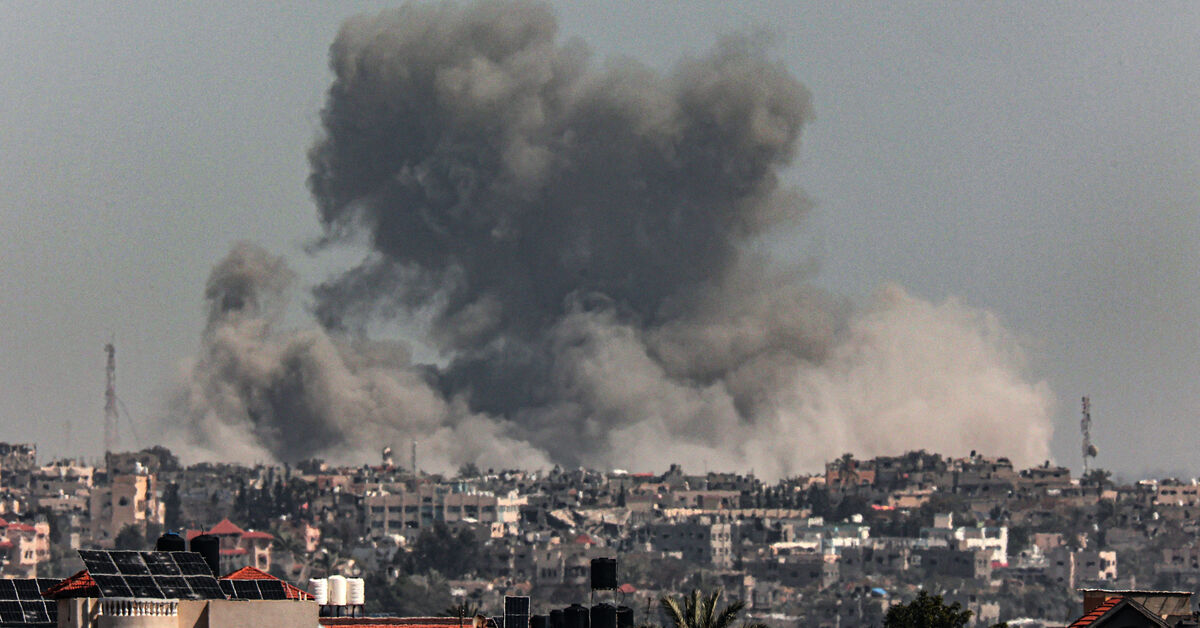
The White House would like to see Israel postpone and even cancel a military operation in the southern Gaza city of Rafah, where more than a million people, displaced form the north of the Strip, have found refuge, and where humanitarian conditions are dire. Netanyahu has been refusing to go back on the operation, though he did agree to wait until the evacuation of the civilian population. The Biden administration was counting on the arrival of the delegation to present them with alternatives to the Rafah operation.
UN vote sparks cancellation
Netanyahu decided to cancel the arrival of the delegation to DC on Monday after the United States avoided using its veto power to scrap a resolution proposal by the United Nations Security Council calling for a cease-fire in Gaza. Netanyahu criticized the proposal for not conditioning the cease-fire explicitly on the release of the hostages and said that the resolution encouraged Hamas to adopt more extreme positions in its negotiations for a hostage-release/Gaza cease-fire deal, effectively blocking the talks ongoing in Qatar.
The White House said that Netanyahu’s accusation was “inaccurate,” as Hamas delivered its response before the UN vote, but Netanyahu insisted that the international support of the proposal aided Hamas because of the pressure it put on Israel.
War cabinet minister Benny Gantz slammed Netanyahu for canceling the delegation. Gantz said on Monday that “the Security Council’s decision has no operational significance for us, and in any case, we will continue to listen to our friends, and we will always do what is right for Israel’s security.” Gantz added that “not only is it right for the delegation to travel — the prime minister would do well if he himself traveled to the US and held a direct dialogue with President Biden and senior government officials.”
Netanyahu canceled the delegation while Israeli Defense Minister Yoav Gallant was in Washington for meetings with national security advisor Jake Sullivan, Secretary of State Antony Blinken and Secretary of Defense Lloyd Austin.
At his meeting with Gallant on Monday, Blinken stressed that alternatives to a ground invasion of Rafah exist that would better ensure Israel’s security while protecting the civilian population there.
Meeting in Jerusalem with visiting US Senator Rick Scott (R-Fl.) on Wednesday, Netanyahu said, “I thought the US decision in the security council was very, very bad,” adding that “it encouraged Hamas to take a hard line and to believe that international pressure will prevent Israel from freeing the hostages and destroying Hamas.”
Netanyahu then said, “My decision not to send the delegation to Washington in the wake of that resolution was first and foremost a message to Hamas — don’t bet on this pressure to work.”