
By Lisa Baertlein and Jonathan Saul
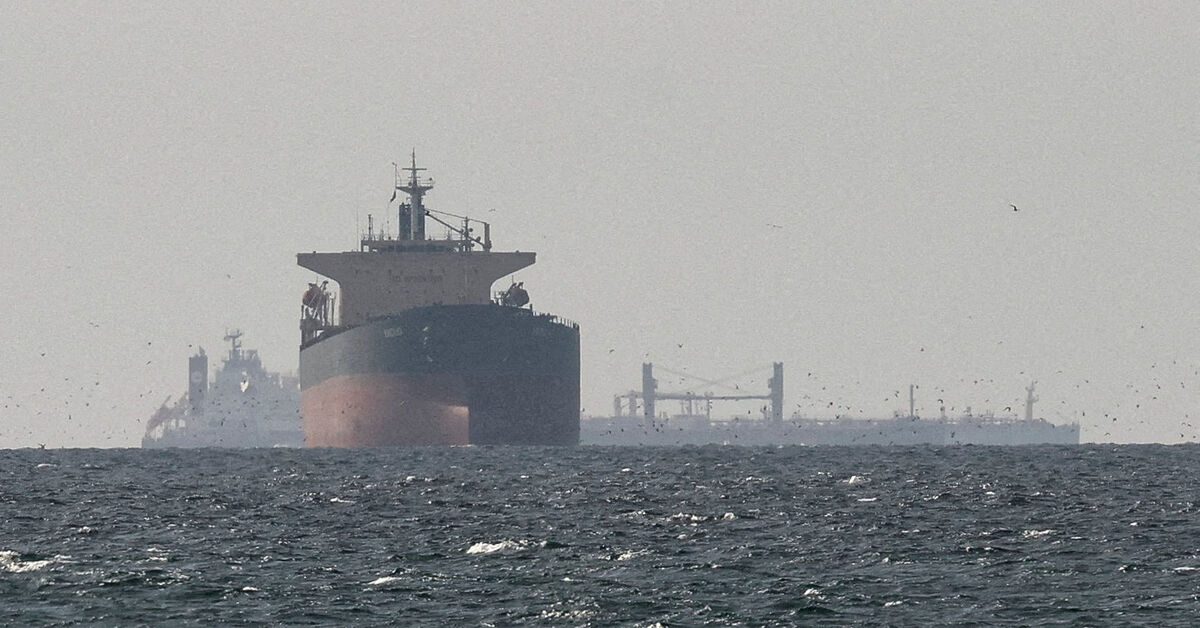
LOS ANGELES/LONDON, March 25 (Reuters) – The Western allies trying to negotiate a way to protect the Strait of Hormuz for energy shipping face a stark reality: a similar effort in the Red Sea that started years earlier cost billions of dollars and ultimately failed against Yemen’s Houthis.
The costly Red Sea experience – four ships sunk, more than $1 billion in weapons expended, and a route that the shipping industry still largely avoids – looms over the more complex Strait of Hormuz, the shipping artery used by roughly a fifth of global oil and liquefied natural gas supply and now blocked by Iran, a more formidable adversary than the Houthis.
Iran’s threats to the strait and its attacks on energy infrastructure in nearby Gulf nations have sent oil prices soaring in the worst disruption to oil and gas supplies in history. Absent the strait’s reopening, shortages will become more acute, threatening higher costs for energy, food and numerous other products worldwide.
“There is no substitute for the Strait of Hormuz,” Kuwait Petroleum CEO Sheikh Nawaf Saud Al-Sabah said in a fiery video call streamed to the CERAWeek energy conference in Houston on Tuesday. “It is the world’s strait, under international law and practical reality.”
U.N. Security Council members on Tuesday were negotiating resolutions for protecting the strait, with some nations, such as Bahrain, taking a forceful stance that would authorize the use of “all necessary means” to protect the strait – which could mean the use of force.
Reuters interviewed 19 security and maritime experts who described the myriad challenges facing the U.S. and its allies in protecting the strait. Iran has far more advanced military forces than the Houthis, an arsenal of cheap drones, floating mines, and missiles, and easy access from its steep mountainous coast to the narrow waterway.
“Defending convoy operations in the Strait of Hormuz is significantly more challenging than in the Red Sea,” said retired Rear Admiral Mark Montgomery, who in 1988 was involved in U.S. tanker escorts through the Strait of Hormuz during the Iran-Iraq war.
That’s a big concern for U.S. President Donald Trump as he seeks to justify the Iran war ahead of the November midterm elections to inflation-weary American voters now facing gasoline at nearly $4 a gallon. The spike in energy prices is not expected to fully reverse until the waterway opens, analysts said.
Trump has been noncommittal about U.S. involvement, first saying the U.S. Navy will escort ships when needed, then more recently saying other nations should lead the effort. Iran has blocked most ships from the maritime chokepoint since joint U.S.-Israeli attacks on Iran began February 28.
Iran is considering a proposal to levy fees on vessels that want to use the strait, a Iranian lawmaker told state media last week.
THE HORMUZ QUAGMIRE
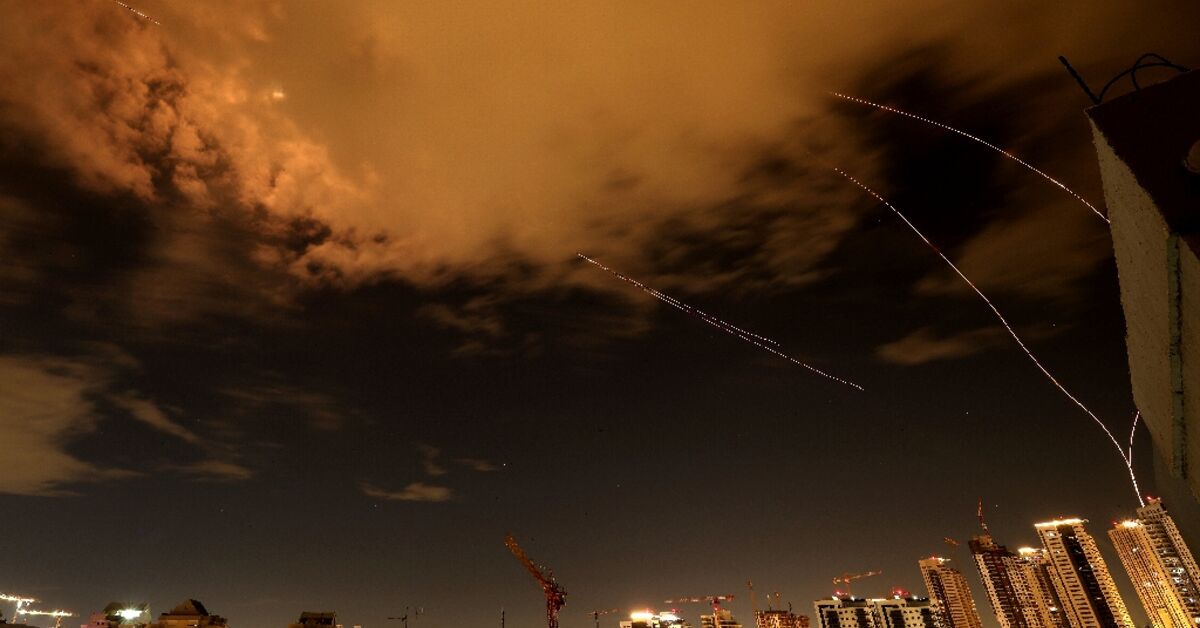
The U.S. mission to protect Red Sea shipping from the Houthis launched in December 2023, with European nations joining in with their own operation a few months later. The allies shot down hundreds of drones and missiles, but the Houthis still sank four ships between 2024 and 2025. Shippers now largely avoid the passageway, once home to 12% of world trade, opting for a much longer voyage around the Horn of Africa.
“It was a tactical and operational victory and a strategic draw, if not a strategic defeat,” said Joshua Tallis, a naval analyst at research firm CNA.
The danger zone around the Strait of Hormuz is up to five times bigger than the Houthis’ attack area around the Bab el-Mandeb Strait that flows into the Red Sea. Unlike the Houthis, Iran’s Islamic Revolutionary Guard Corps (IRGC) is a professional military with its own weapons factories and access to funding.
Providing escorts for the strait would require as many as a dozen large warships such as destroyers, backed up by jets, drones and helicopters to account for the limitations created by the lack of space to maneuver, some military experts said. Overhead air cover would be critical to protect against flying drones as well as explosive-laden manned or unmanned vessels that can easily blend into sea traffic.
“A destroyer can intercept missiles but cannot simultaneously sweep mines, counter drone-boat swarms from multiple bearings, and manage GPS disruption,” SSY analysts said.
Analysts believe Iran’s IRGC fighters have missile and drone stockpiles hidden in buildings and caves along the hundreds of miles of steep and mountainous coastline. In some places, the shore comes so close to ships that drones could swarm a vessel in as little as five to 10 minutes, experts said.
“There are ballistic missiles, drones, floating mines and even if you were able to destroy those three capacities, there are suicide operations,” said Adel Bakawan, director of the European Institute for Studies on the Middle East and North Africa.
Sea mines and heavily armed mini-submarines are a threat the U.S. did not encounter in the Red Sea, said Tom Sharpe, a retired Royal Navy commander. He said the stakes for meeting those threats are enormous.
“If (the Americans) lose a destroyer in this … that changes the calculus of everything. That’s 300 people,” Sharpe said, referring to potential deaths of U.S. sailors.
There is no clear evidence that Iran mined the strait, U.S. Defense Secretary Pete Hegseth said earlier this month, after reports that Iran had deployed about a dozen mines in the waterway.
A combination of mine clearing, military escorts and air patrols should eventually get strait traffic moving again, said Bryan Clark, an autonomous warfare expert at the Hudson Institute.
“You might have to do that for months before you have finally eroded the IRGC threat,” Clark said.
(Reporting by Lisa Baertlein, Jonathan Saul, Renee Maltezou, John Irish, Sarah Young, Kate Holton and Abhinav Parmar; Editing by Richard Valdmanis and David Gaffen)