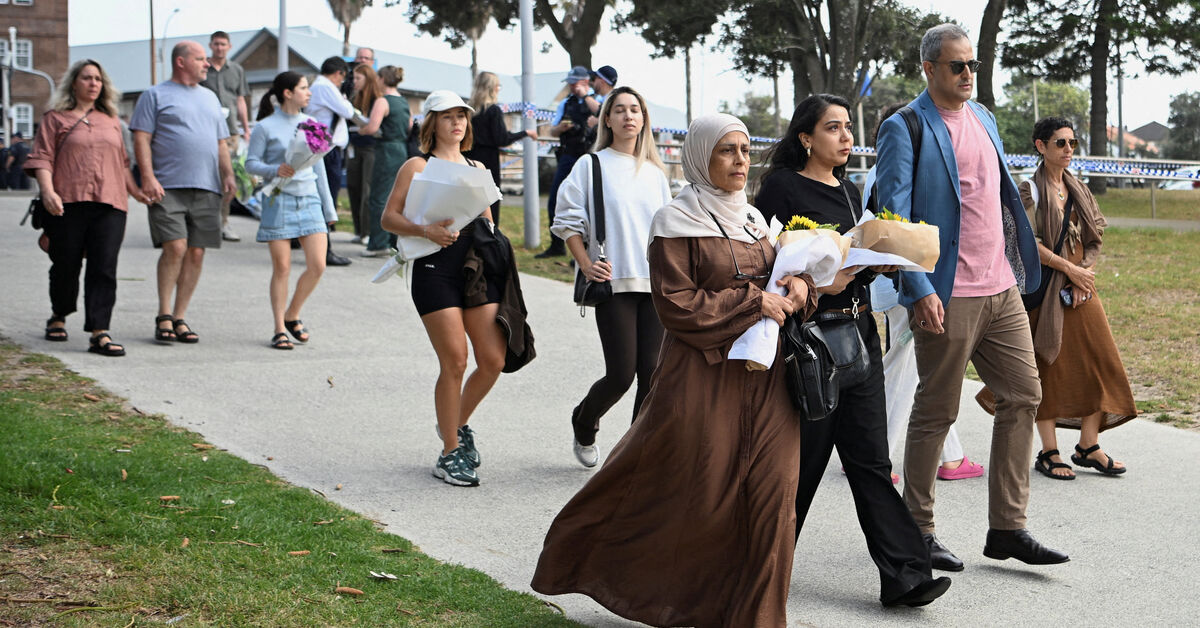
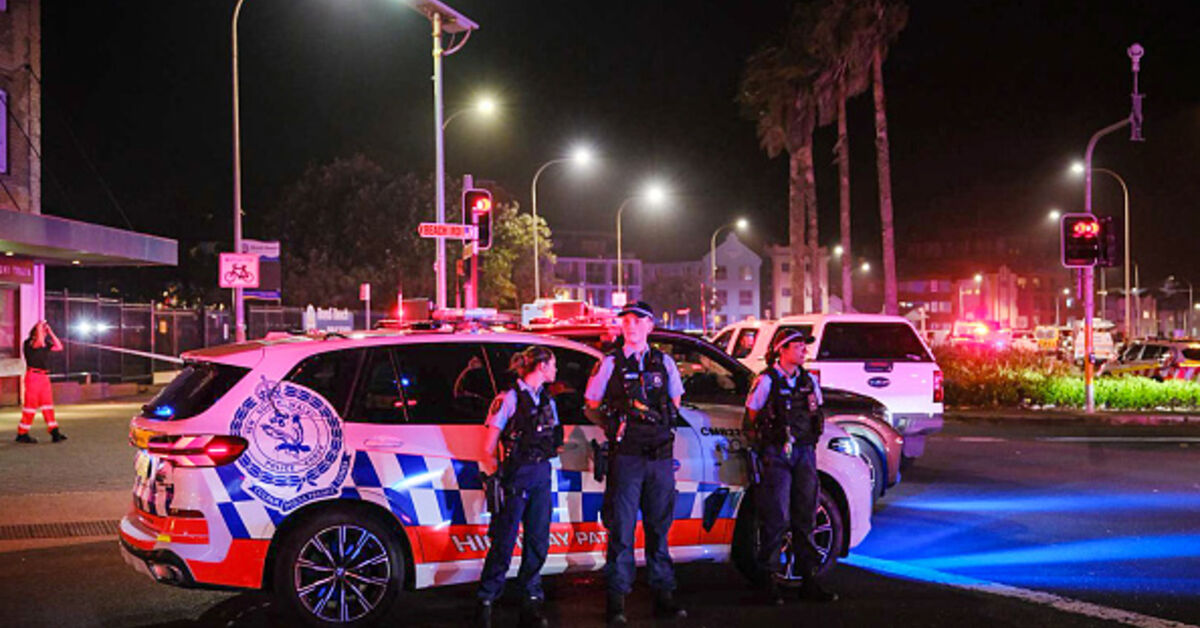

At least 16 people were killed and 40 injured when gunmen opened fire on a Hanukkah event at Sydney’s Bondi Beach on Sunday, in an attack authorities said was motivated by antisemitism and marked one of the deadliest shootings in Australian history.
The assault unfolded at one of the country’s most famous beaches, where police said well over 1,000 people had gathered to celebrate the first night of the Jewish holiday. Australian Prime Minister Anthony Albanese condemned the shooting as “an act of evil antisemitism, terrorism.”
Police said two gunmen took part in the rampage, adding that the attackers were father and son. One of the attackers was fatally shot during a confrontation with police, while the second was arrested and remains in critical condition, authorities said. Authorities have stated that police officers were among those injured.
In a press conference Sunday, Mal Lanyon, the New South Wales Police Force commissioner, said that “The condition of those officers and the others transported [to hospitals] are serious.”
Lanyon said that there were “well over 1,000 people” at Bondi Beach when the attack occurred. “As a result of the circumstances of the incident tonight … I declared this to be a terrorist incident,” he said.
One of the victims was identified as Rabbi Eli Schlanger, 41, an assistant rabbi at Chabad of Bondi. Schlanger played a central role in organizing the Hanukkah celebration, according to a statement from Chabad, which described him as a deeply respected leader within the local Jewish community. Citing local authorities, ABC reported that a 10-year-old girl and 40-year-old man were also among those killed.
🕯️Baruch Dayan Haemet Rabbi Eli Schlanger hy”d
Eli was the assistant rabbi at Chabad of Bondi and a key organizer of the event. For 18 years, since his marriage to wife Chaya, he has served as a rabbi and chaplain in the Bondi community.
הרב פייבל אליעזר בן בנימין הלוי הי”ד pic.twitter.com/HtzT38DtYn
— Chabad.org (@Chabad) December 14, 2025
Videos of the attack have circulated widely online, including one video showing a man – now identified by relatives as shop owner Ahmed al-Ahmed – tackling one of the gunmen and seizing his gun.
“We will have a significant investigation. Our counterterrorism command will lead this investigation,” Lanyon added.
In an earlier statement, Albanese said that the country’s national security committee had been convened in response to the attack and that authorities were working urgently to identify “anyone associated with this outrage,” Albanese added.
Trump, Netanyahu weigh in
At the White House on Sunday, US President Donald Trump condemned “the antisemitic attack” in Sydney, adding, “I just want to pay my respects to everybody.”
Israeli Prime Minister Benjamin Netanyahu, meanwhile, addressed the shooting during a government meeting on Sunday.
“Your call for a Palestinian state pours fuel on the antisemitic fire. It rewards Hamas terrorists. It emboldens those who menace Australian Jews and encourages the Jew hatred now stalking your streets,” Netanyahu said, citing a letter he sent to the Australian leader in recent months.
The Israeli premier, addressing Albanese, said that “your government did nothing to stop the spread of antisemitism in Australia … you let the disease spread and the result is the horrific attack on Jews we saw today.”
Similar sentiments were echoed by prominent leaders of Australia’s Jewish community. Colin Rubenstein, executive director of the Australia/Israel and Jewish Affairs Council, said warnings about escalating antisemitic rhetoric had gone unheeded by the government.
“We have warned for years that the unceasing antisemitic vitriol on our streets would evolve into antisemitic violence if left unchecked…We have begged our political leaders to stop offering just sentiments and start providing real effective action,” Rubenstein said.
Alex Ryvchin, the co-CEO of the Executive Council of Australian Jewry, told CNN on Sunday that “this was the logical conclusion of what’s been simmering in this country for two years.” There have been over 2,000 incidents recorded in the last two years, Ryvchin noted, adding that “the writing was on the wall.”
Australia’s Jewish population numbers about 120,000 people in a country of roughly 27 million and is concentrated primarily in major cities. Melbourne is home to the largest share followed by Sydney. An estimated third of the Jewish community live in the city’s eastern suburbs, including Bondi.
***IMPORTANT INFORMATION***
Police can confirm 16 people have died and 40 people remain in hospital following yesterday’s shooting at Bondi.
More information will be made available soon.
— NSW Police Force (@nswpolice) December 14, 2025
Antisemitism in Australia
As Al-Monitor’s Rina Bassist reported earlier this year, data released by Jewish monitoring organizations show a sharp rise in antisemitic incidents across Australia, particularly since Hamas’ Oct. 7, 2023 attack and the ensuing war in Gaza. A January 2025 report by the Jewish Agency for Israel found that reported cases in 2024 were nearly four times higher than in 2022, with a significant portion involving physical violence. Many incidents were linked to protests, demonstrations, or political slogans that crossed into explicit antisemitism.
A separate report published late last year by the Executive Council of Australian Jewry documented more than 2,000 antisemitic acts in 2024 alone.
Authorities have previously disrupted planned attacks against Jewish targets. In January 2024, Sydney police uncovered a vehicle containing several kilograms of explosive material in a suburban neighborhood, along with a list of potential targets that included Jewish institutions.
In December 2024, Melbourne’s Adass Israel synagogue was set on fire while several men were inside studying; they escaped without injury. That same month, a group of neo-Nazis marched outside the Victorian state parliament in Melbourne, displaying a banner bearing antisemitic slogans.
At the press conference on Sunday, in response to a question regarding criticism over his government’s response to rising antisemitism in Australia, Albanese said that “we have taken it seriously…we’ll continue to do so.”