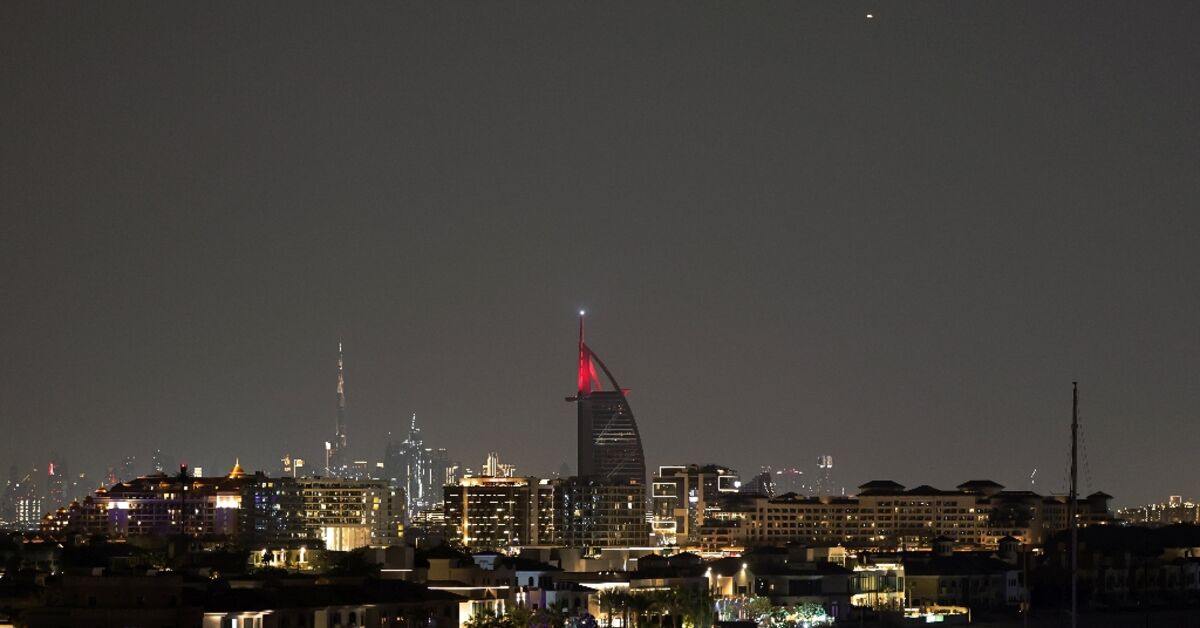

When blasts rolled across Dubai as air defences intercepted Iranian missiles overhead, Marion Kuria froze as a tremor ran through her building.
Then, like countless African migrants in the Gulf, she went back to work, driven by a need for income and with few alternatives to turn to.
The 36‑year‑old Kenyan, who has spent seven years in the city’s retail sector, told AFP she felt the shock “in her spine”.
“The anxiety was extremely high,” she said.
She is one of thousands of Africans across the Middle East hunkering down as the Gulf fends off Iran’s retaliatory drone and missile attacks since US‑Israeli strikes sparked war last Saturday.
Explosions have rocked cities including Kuwait’s capital, Manama, Dubai and Abu Dhabi, as Tehran targets US assets and hits civilian infrastructure across the region.
At least 13 people, including seven civilians, have been killed.
Yet for many African workers like Kuria, who has little chance of finding work at home, leaving is hardly an option.
Arnold Keumoe Tchimmoe, a 34‑year‑old Cameroonian restaurant supervisor has spent 11 years in Dubai.
The first blast caught him just as he arrived at work — a bang so sharp he thought someone had hit his car — before he stepped out and saw debris falling from the sky.
Even then, he said he felt calm, convinced that his wife, four-year-old son and mother remained better off in the United Arab Emirates than in Cameroon.
“I am more safer here,” he told AFP, bluntly dismissing any thought of returning home: “Never.”
– Gulf African workforce –
For years, the oil-rich Gulf has pulled in workers from across Africa, offering salaries that far outstrip what many could earn at home.
Many take jobs in hotels, restaurants and the security sector, or as cleaners and domestic workers in private homes.
Around 715,000 sub-Saharan Africans are in Saudi Arabia alone, making up more than five percent of the kingdom’s foreign population, according to a 2022 census.
Little is known about the true scale of sub‑Saharan migration to the Gulf, a 2024 study by the Gulf Research Center said, though growing African communities are now visible in the UAE, Qatar, Kuwait and Bahrain.
Kenya’s foreign ministry said on Friday more than 500,000 of its nationals live and work across the Middle East, many sending home vital remittances.
For now, Nairobi says most are remaining.
They are continuing “with their daily activities, whether for work, study, or personal matters, either in person or remotely, depending on prevailing local circumstances,” Foreign Minister Musalia Mudavadi said in a statement.
Unlike European governments, which have chartered evacuation flights, African workers say the decision to stay or leave has been left to them.
While job opportunities are good for some, leaving for others may be more theoretical than real under the long-criticised sponsorship system common in the Gulf. Human rights groups have said employers often hold workers’ passports and control their ability to change jobs.
“As much as we are safe now, we did not sign up for this,” Kuria said of the bombardments.
– Balance safety and livelihood –
Many have weighed the dangers against the very reason they went to the Gulf.
Ghanaian Samuel Kwesi Appiah, 29, arrived in Dubai three years ago with help from an uncle who sponsored his move. He now works for a logistics firm.
“I came to work and support my family back home. If I leave suddenly, it will affect my income and the people depending on me,” he said, vowing to pack up only if “the situation becomes very dangerous.”
In Qatar, a Zimbabwean woman working in the hospitality industry, who spoke on condition of anonymity, described the fragile balance between safety and livelihood.
“We are worried and our relatives back home are also worried about us. They think that we are not telling them the truth about the real situation,” she said.
Zimbabwean missions in Kuwait and the UAE have only urged Zimbabweans in the Gulf to remain vigilant — guidance that, for now, aligns with her own decision to stay.
“People want to maintain their jobs,” said Peter, a Kenyan employed in a UAE restaurant, adding that many were wary of speaking openly, fearing fines if they are accused of spreading rumours about events.
burs-ho/jcb