
In his makeshift tent in Gaza City, displaced Palestinian Jamal Abu Mohsen says the bombs are falling less often these days.
Since Israel launched its military campaign against Iran — which has since widened to Lebanon — the 33-year-old Palestinian has noticed a lull in the devastated Palestinian territory.
“Air strikes have become fewer,” Abu Mohsen told AFP from his tent in the north of Gaza.
But the quiet is only relative.
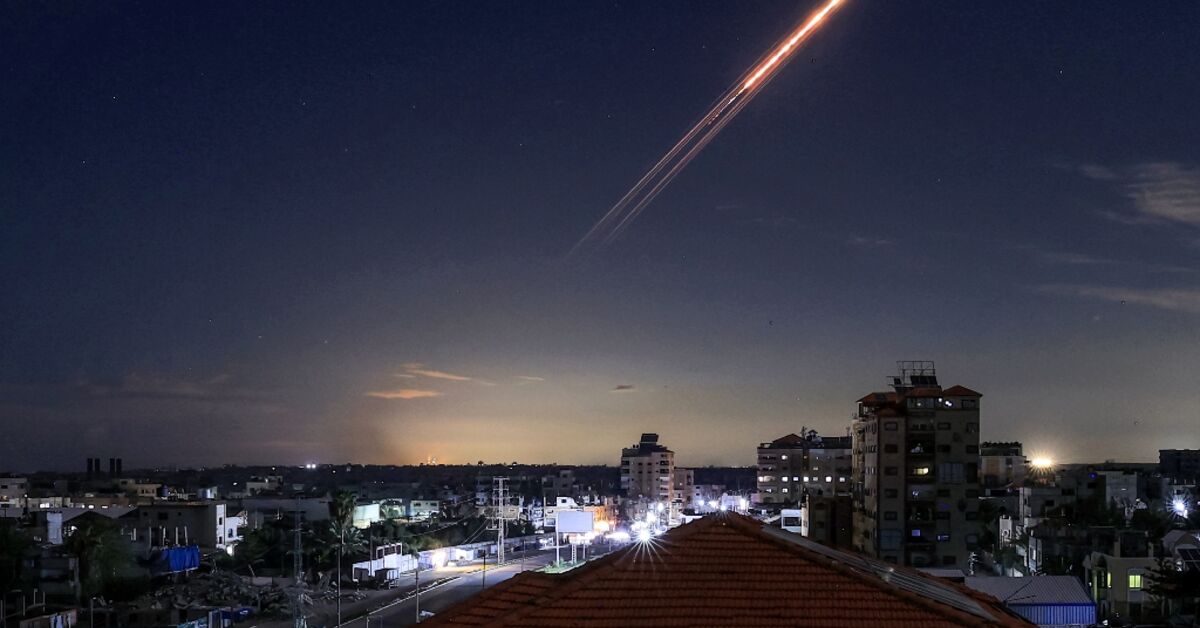
Despite a US-brokered ceasefire in place since October 10, explosions still rock Gaza, Abu Mohsen said.
Blasts from house demolitions and artillery shelling reverberate across the territory, alongside the constant hum of warplanes and reconnaissance drones overhead.
According to Gaza’s civil defence agency, Israeli forces killed one woman and injured another individual in the Al-Mawasi area Saturday, and injured “several” by live fire in the central Al-Bureij refugee camp.
But for Abu Mohsen and other Gazans, it is the daily living that has gotten more arduous, with borders once again tightened since the war on Iran began.
On Saturday, when the US-Israeli attacks on Iran started, Israel shut all entry points into the Palestinian territory for several days.
Though the Kerem Shalom crossing reopened on Tuesday, Gaza’s main gateway at Rafah, on the Egyptian border, remains closed.
“Israel is taking advantage of the world’s preoccupation with the war on Iran and increasing restrictions on Gaza,” Abu Mohsen said.
– ‘Want to live like human beings’ –
In the southern coastal area of Al-Mawasi, 59-year-old Abdullah al-Astal said the drop in strikes had been overshadowed by a new squeeze on essentials.
“It’s true that the Israeli bombardment has become much less, but Israel is preventing the entry of food aid and fuel,” Astal told AFP.
For him, geopolitics were beside the point compared to his ability to live with dignity.
“Personally, I don’t care” about slain Iranian supreme leader Ali Khamenei or anyone else, he said. “I don’t support Iran, whether it supported Gaza or not.”
“We want to live like human beings.”
Gaza depends almost entirely on aid trucks for food, medicine and fuel. When the crossings close, even briefly, local markets react instantly.
A source in Gaza’s crossings authority confirmed to AFP that “a small number of trucks” were able to enter Gaza via Kerem Shalom Wednesday, but that his agency was not officially notified of the crossing’s opening.
Israeli authorities informed them that Rafah would remain shut until further notice, the source added.
The office of the United Nations Special Coordinator for the Middle East Peace Process, UNSCO, reported that 500,000 litres of fuel entered Gaza via Kerem Shalom Tuesday.
Even so, the damage had been done.
“What we saw is that immediately there was an increase in prices,” Jonathan Crickx, spokesman for the UN children’s agency UNICEF, told AFP.
“Most basic necessity items, like food, soap, those sort of things, saw their prices increase by 200 or 300 percent,” he said, adding that “this really shows Gaza’s extreme vulnerability and extreme dependency on outside aid”.
– Panic-buying –
Felipe Ribero, head of mission for the medical charity Doctors Without Borders (MSF) in the Palestinian territories, said that Gazans rushed to stock up on essentials when Kerem Shalom reopened on Tuesday.
“There was a hyperinflation of prices over a few days”, partly because storage capacity in Gaza is low, and a break in the flow of goods quickly creates shortages, he said.
In a displacement camp in Gaza City, retired teacher Safiya Hammouda described panic-buying as soon as the Iran war began.
“From the first day of the Iran war, people were afraid and began buying anything in the market. Basic goods are available but have started to run out,” she told AFP.
Though shelling has eased in recent days, she said, “Gaza is completely neglected”.
“They want to destroy Iran and turn it into a devastated country like Gaza, incapable of providing food and life,” she said, pointing to the utter destruction in the territory, where the UN said in October 2025 that 81 percent of all structures were damaged.
In a tent pitched inside a school compound, Mohammad al-Hilu said prices for some goods had doubled or more within days.
“I think the world will forget Gaza and no one will pay attention to our suffering,” he said.