
Iran and Bahrain have started talks on the release of frozen Iranian funds in addition to the resumption of diplomatic ties, Tehran announced on Monday, potentially signaling an improvement in bilateral relations after years of tensions.
The official Islamic Republic News Agency reported on Monday that officials from Iran’s and Bahrain’s central banks held a meeting the day prior to discuss the release of Iran’s “foreign exchange resources in Bahrain.” According to the agency, the funds belong to the Central Bank of Iran as well as other Iranian banks, and the talks will continue in the coming days.
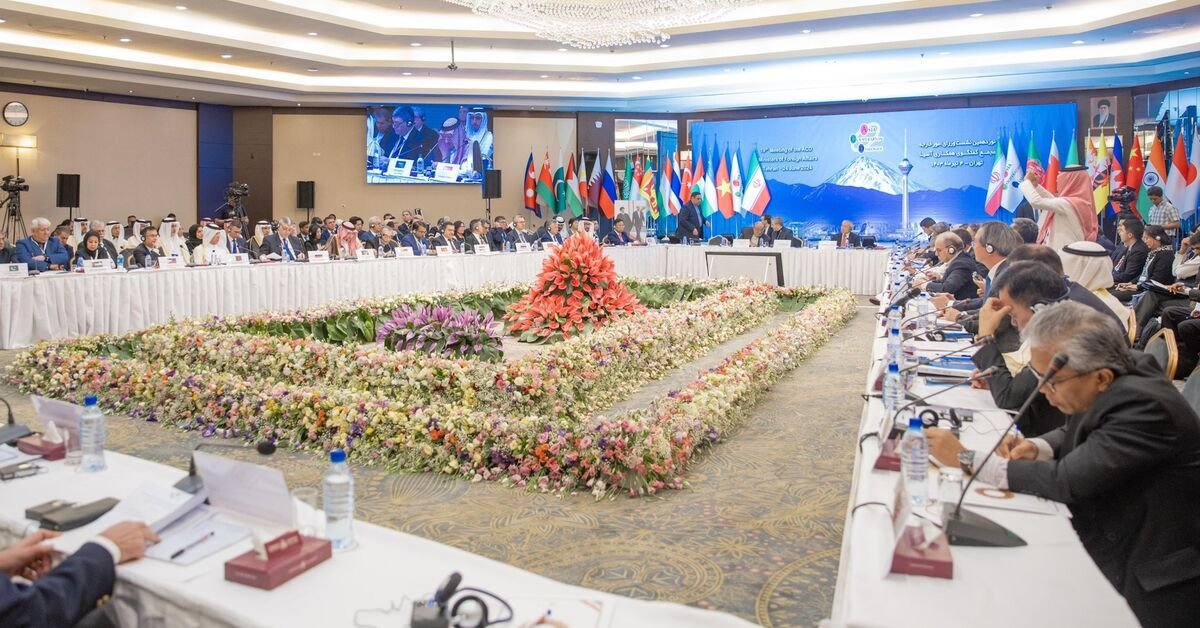
Also on Sunday, Bahraini Foreign Minister Abdullatif bin Rashid Al Zayani met his Iranian counterpart, Ali Bagheri-Kani, in Tehran. Following the meeting, the two countries released a joint statement saying they “agreed to set up required mechanisms to initiate talks between the two countries to discuss the resumption of political relations between them,” the official Bahrain News Agency reported.
بيان مشترك بشأن مباحثات وزيري الخارجية في مملكة البحرين والجمهورية الإسلامية الإيرانية https://t.co/yw77YoNMRM pic.twitter.com/bediNQr61i
— وزارة الخارجية 🇧🇭 (@bahdiplomatic) June 23, 2024
Zayani was in Tehran for the Asia Cooperation Dialogue’s ministerial summit. The Asia Cooperation Dialogue is an intergovernmental organization aimed at boosting cooperation between Asian Countries. Iran, Bahrain, Saudi Arabia, the United Arab Emirates, Turkey, China and India are among the 35 members, according to the organization’s website.
Iran did not specify the amount of frozen assets in Bahrain or the accompanying circumstances. Some countries have refused to release Iranian funds in recent years out of fear of US sanctions. In September of last year, Iran gained access to $6 billion in oil funds that were previously frozen in South Korea due to US sanctions. The funds were released to a Qatari account that Iran had access to as part of a prisoner exchange deal between the Islamic Republic and the United States. Seoul previously declined to release the funds due to US sanctions on Iran’s energy sector.
Why it matters: Bahrain and Iran have had a tense relationship for years. Manama’s government has long accused the Islamic Republic of supporting dissident groups among Bahrain’s majority Shiite population.
In January, Bahrain provided support to the United States and the United Kingdom in their strikes against the Iran-backed Houthi forces in Yemen — the only Arab country to do so. Kristian Coates Ulrichsen, Fellow for the Middle East at Rice University’s Baker Institute for Public Policy, told Al-Monitor at the time that Bahrain’s concerns about Iran may have prompted its support for the strikes, saying the kingdom “likely sees any action against Iran-aligned groups in the region through the prism of its close security and defense ties with Washington and its tense relationship with Tehran.”
Last month, Bahrain’s King Hamad bin Isa Al Khalifa told Russian President Vladimir Putin that there was no reason to postpone the resumption of relations with Iran.
In March of last year, Saudi Arabia and Iran resumed relations in a deal brokered by China. Saudi Arabia and Bahrain are closely aligned on regional issues.
Know more: Bahrain began a crackdown against activists following the Shiite-led Arab Spring protests in 2011. The Gulf monarchy has been criticized by rights groups for alleged unfair trials and mistreatment of political detainees.