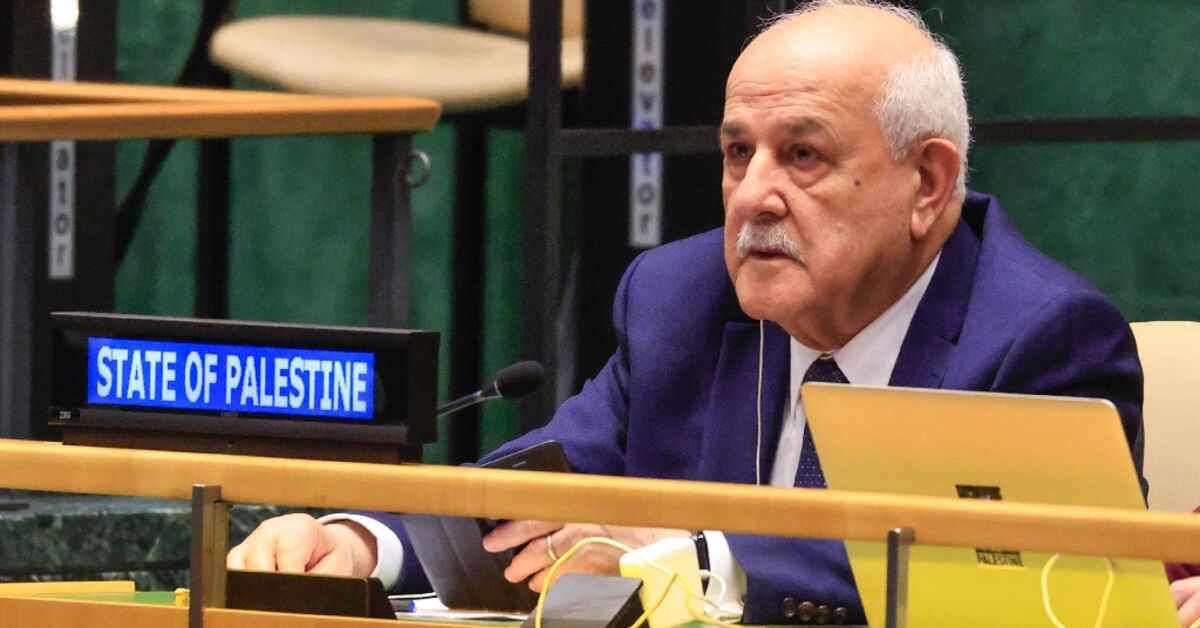
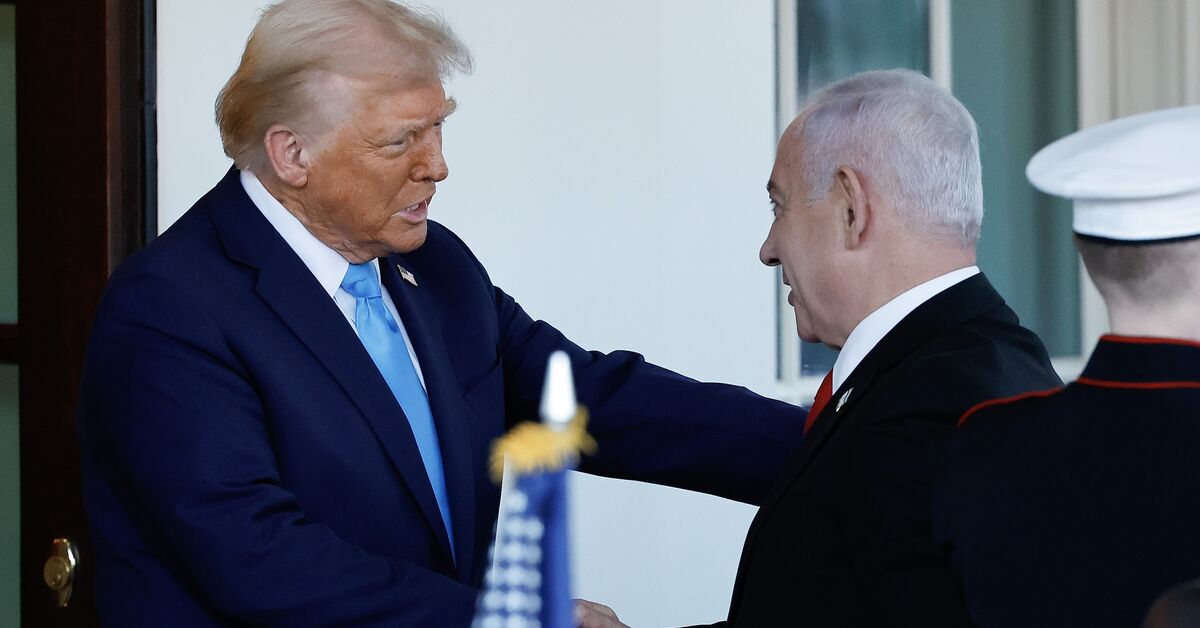

WASHINGTON — US President Donald Trump appeared to call for the near total removal of the Palestinian population from Gaza on Tuesday during a White House meeting alongside Israeli Prime Minister Benjamin Netanyahu, doubling down on prior remarks that created confusion and sparked allegations that he was in support of ethnic cleansing.
“You look over the decades, it’s all death in Gaza. This has been happening for years. It’s all death. If we can get a beautiful area to resettle people permanently in nice homes and where they can be happy and not be shot, not be killed,” Trump said.
“I think that if we can resettle, and I believe we can do it in areas where the leaders currently say no,” he continued, in reference to Jordan and Egypt.
The comments came amid Netanyahu’s visit to Washington — the first by a foreign leader during Trump’s second term in office. Asked how many of Gaza’s 2.2 million people he felt should be relocated, Trump suggested 1.7-1.8 million.
“I think all of them. I think they’ll be resettled in areas where they can live a beautiful life and not be worried about dying every day.”
‘Cleaning out Gaza’
Just prior to his meeting with Netanyahu on Tuesday, Trump doubled down on his comments over the weekend that the United States and Israel should “clean out” Gaza in the aftermath of the 15-month war.
The remarks led to a firestorm of criticism in the Arab world and allegations that the president supports de facto ethnic cleansing in the narrow seaside enclave.
The UN’s International Criminal Court has ruled that allegations that Israel has committed genocide in Gaza are “plausible.” Netanyahu remains a fugitive from the ICC for alleged decisions that led to alleged crimes against humanity in the Palestinian enclave.
More than 80% of Gaza’s buildings have been destroyed and more than 47,000 people killed, the majority of them women and children.
“They have no alternative right now,” the president said of Gaza’s population of 2.2 million people. “I mean, they’re there because they have no alternative. What do they have? It is a big pile of rubble right now,” he added. “I don’t know how they could want to stay. It’s a demolition site.”
The governments of both Egypt and Jordan swiftly rejected the idea in statements over the weekend. Five Arab countries and the secretary-general of the Arab League also released a joint statement on Saturday squarely rejecting any plan to displace Palestinian inhabitants from the enclave as “ethnic cleansing.”
Yet White House officials sought to put a humanitarian spin on the president’s proposal ahead of Netanyahu’s state visit on Tuesday.
Trump’s Middle East envoy, former real estate investor Steve Witkoff, became the first senior American official to visit Gaza in 15 years when he reached the Netzarim Corridor with Israeli escorts last week.
The devastation wrought by the Israeli military upon Gaza reportedly made an impression on the envoy. Witkoff came away convinced that the five-year timeline suggested by former President Biden’s May 2024 ceasefire proposal was insurmountable, White House officials said.
“I would push back on the characterization of ‘cleaning out’ Gaza,” US national security adviser former Republican Congressman Mike Waltz said to a reporter outside the White House ahead of the bilateral meeting on Tuesday. “I think President Trump is looking at this from a humanitarian standpoint,” Waltz added.
“You have these people who are sitting with literally thousands of unexploded ordnance in piles of rubble,” he said. “That’s what we’ll work through with Prime Minister Netanyahu,” he said.
Witkoff also sought to defend Trump’s prior suggestion ahead of the meeting with Netanyahu. “When the president talks about cleaning it out, he talks about making it habitable. And this a long-range plan. … As to where people will go, that’s a big issue, and we have to solve that. And that’s what we’re here to do.”
Trump on Tuesday said he believes unspecified “other countries” will accept refugees from Gaza. “You could build four or five or six areas,” Trump said. “You build really good quality housing, like a beautiful town, like some place where they can live and not die, because Gaza — it’s a guarantee that they’re going to end up dying. The same thing is going to happen again.”
The US president further claimed that “many countries, many leaders of countries” had “reached out that would like to participate. It doesn’t have to be Jordan and Egypt.”
He waved off a journalist’s question about whether he supports a return of Israeli settlements to Gaza, suggesting the enclave was uninhabitable.
Sitting before the cameras in the Oval Office alongside Trump later on Tuesday, Netanyahu neither endorsed nor pushed back on the president’s suggestion.
The Israeli prime minister underscored that he remains committed to the return of all hostages from Gaza as well as to achieving all of Israel’s military objectives there — including preventing the militant group from ever staging another attack on Israel, implying a potential continuation of the war.
Netanyahu further suggested that Trump can assist with those objectives. “I think the president can help enormously,” the prime minister said.
Asked by a reporter whether he supports “Trump’s vision for getting all the hostages back home, even if it means an end to the war?,” Netanyahu responded, “Well, I’m not sure that you articulate correctly what the president’s vision is. He can speak for himself. He does that very, very well.”
Trump made no commitment with regard to the ceasefire in his comments following the meeting. He also did not specify whether Netanyahu had committed to upholding the ceasefire, although White House officials said earlier on Tuesday that he was expected to engage the Israeli prime minister on the issue.
“We’re in phase two now,” Witkoff told reporters on Tuesday outside the White House.
Witkoff added that he will meet with Qatar’s prime minister in Florida on Thursday to further cement the truce. “We’re dug in,” he said.
The president’s earlier suggestion that he would pressure the leaders of Egypt and Jordan to take Palestinian refugees from Gaza drew rare praise from Netanyahu’s extreme right-wing coalition allies.
“Donald, this looks like the beginning of a beautiful friendship,” Netanyahu’s former security minister, Itamar Ben-Gvir, tweeted following the president’s comments on Tuesday evening.
Jordan’s King Abdullah II is expected to meet with Trump at the White House next week on the heels of the Israeli prime minister’s visit.
“We’re looking to a number of our allies, partners in the region. We have to collectively solve this problem,” Waltz told reporters ahead of the Netanyahu meeting.
Any large-scale displacement of Palestinian refugees into neighboring Jordan is likely to exacerbate the country’s fragile economy and would almost certainly trigger widespread unrest, which could threaten the Hashemite dynasty’s hold on power. Already, Jordanian officials have been closely eyeing increasing violence in the adjacent West Bank.
Trump spoke again with Egypt’s leader, Abdel Fattah el-Sisi, on Saturday.
“I think the president is driving practical, common-sense solutions to what is admittedly a very difficult situation,” Waltz said.