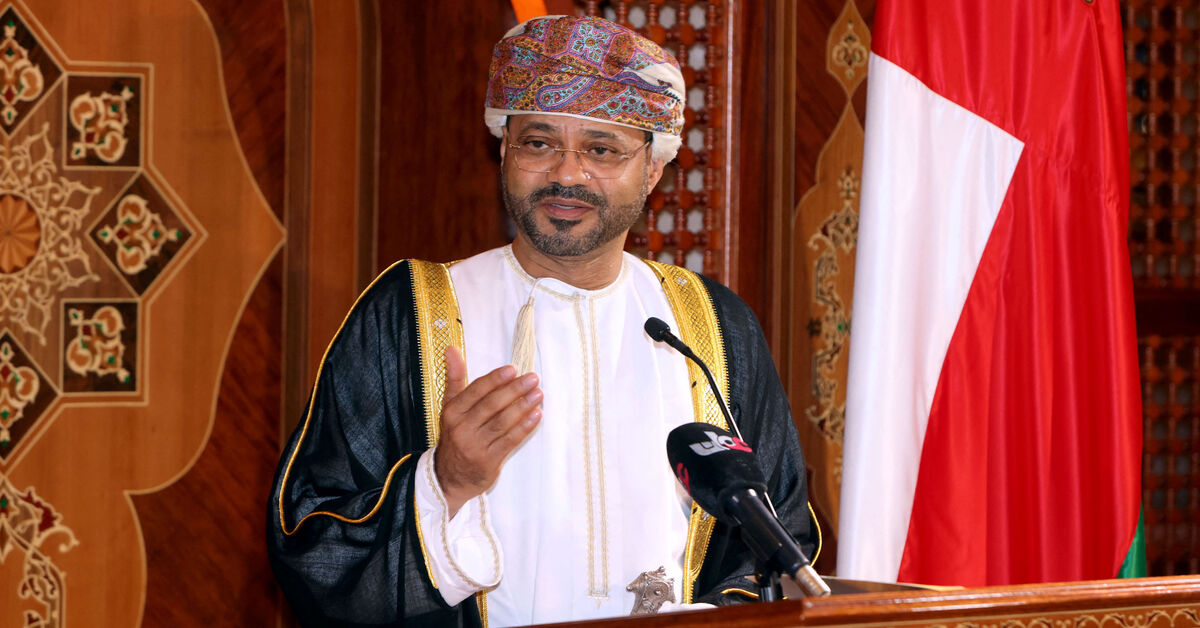

MUSCAT, Oman — Iran and the United States are close to finalizing a deal on the release of Americans held in Tehran, Oman’s foreign minister told Al-Monitor.
Omani Foreign Minister Sayyid Badr Albusaidi said in an interview Wednesday he senses “seriousness” on the part of both Washington and Tehran as they seek to restore the 2015 nuclear deal under which Iran agreed to curb its nuclear activity in exchange for sanctions relief. Eighteen months of on-and-off negotiations broke down in September after US officials said Iran put forward new demands that went beyond the scope of the original deal.
At stake are the fates of Americans Siamak Namazi, Emad Shargi and Morad Tahbaz, who are imprisoned in Tehran’s notorious Evin Prison on espionage charges the United States says are baseless. The Biden administration is unlikely to reenter the nuclear accord without first securing their release, analysts say.
As part of a deal, Iran is seeking the release of billions of dollars in Iranian assets frozen in South Korean banks under US sanctions. A proposed mechanism would permit Iran to access those funds for humanitarian purposes. Third parties including Oman, Qatar and the United Kingdom have at various times played a role in facilitating those discussions.
“I can say they are close,” Albusaidi said of a potential prisoner agreement. “This is probably a question of technicalities.”
“They need to have a framework [and] a timeframe of how this should be orchestrated,” he said of the frozen funds. “I think they’re ironing those things out.”
Oman, which acted as a backchannel for the 2015 nuclear talks, has been a venue for indirect talks between US and Iranian officials over restoring the deal, according to several sources with knowledge of the effort. On Monday, Iran’s Foreign Ministry confirmed reports that Muscat hosted the recent discussions, adding they “were not secret.”
Albusaidi did not confirm Oman’s involvement, but said his country has “offered in good faith our offices to help both sides, be it here or anywhere else.”
Analysts suggest the Biden administration wants to get a deal across the finish line quickly so that Republican opposition is not a key issue in the 2024 presidential campaign. A deal to reenter the nuclear agreement would be subject to congressional oversight at a time when tensions are high over Iran’s supply of bomb-carrying drones to Russia and its crackdown on nationwide protests.
Iran’s rapidly expanding nuclear program and its stonewalling of inspectors have also injected urgency into the talks. The United States now estimates that Tehran’s so-called breakout period — the time needed to amass enough fissile material for one nuclear bomb, if it chooses to do so — has gone from one year to “weeks or less.”
A State Department spokesperson told Al-Monitor that the administration via regional channels is “concurrently urging Iran to take a de-escalatory path after several months of negative developments.”
Releasing the prisoners would be one such step. Ali Vaez, an Iran expert at the International Crisis Group who closely tracks the negotiations, said there’s a clear linkage between the detainee negotiations and the broader context in which a deal can happen.
Vaez said the two sides were close to a detainee pact in March, but those discussions were derailed for several weeks after tit-for-tat attacks between Iran-backed forces and US personnel in Syria killed an American contractor.
“The Omanis are trying to help the US and Iran figure out how they do a detainee deal in a context that is not as tense and unstable as it has been in the past,” Vaez said, adding there appears to be sufficient momentum for a prisoner deal in the next few weeks.
A European diplomat familiar with the talks also said a prisoner deal was “close.” Reached for comment, a spokesperson for the Iranian mission to the United Nations said, “This round of the prisoner exchange has been on the agenda for more than two years and we are now, more than ever, closer to reaching an agreement.”
Fueling the speculation is a flurry of diplomatic activity in recent weeks, including a meeting Monday in Abu Dhabi between Iran’s chief nuclear negotiator Ali Bagheri Khan and the political directors from the nuclear deal’s European signatories. Oman’s Sultan Haitham bin Tariq al-Said also visited the Iranian capital in late May, shortly after Tehran released Belgian aid worker Olivier Vandecasteele in a prisoner swap facilitated by Muscat. Days after the sultan’s visit, Iran released one Danish and two Austrian detainees in a deal Oman reportedly helped broker.
In what some saw as an effort to de-escalate tensions with Iran, the United States last week approved Iran’s accessing of roughly $2.7 billion in gas and electricity debt that was held in accounts in Iraq. The State Department downplayed the decision as a routine clearance “for humanitarian and other non-sanctionable transactions.”
Albusaidi said Wednesday there is a “positive atmosphere” surrounding the nuclear issue, adding that he believes the Iranian leadership is serious about reaching an agreement.
“As long as the other side also reciprocates that in good faith, they’re willing to do this,” he said.