
By Ryan Patrick Jones
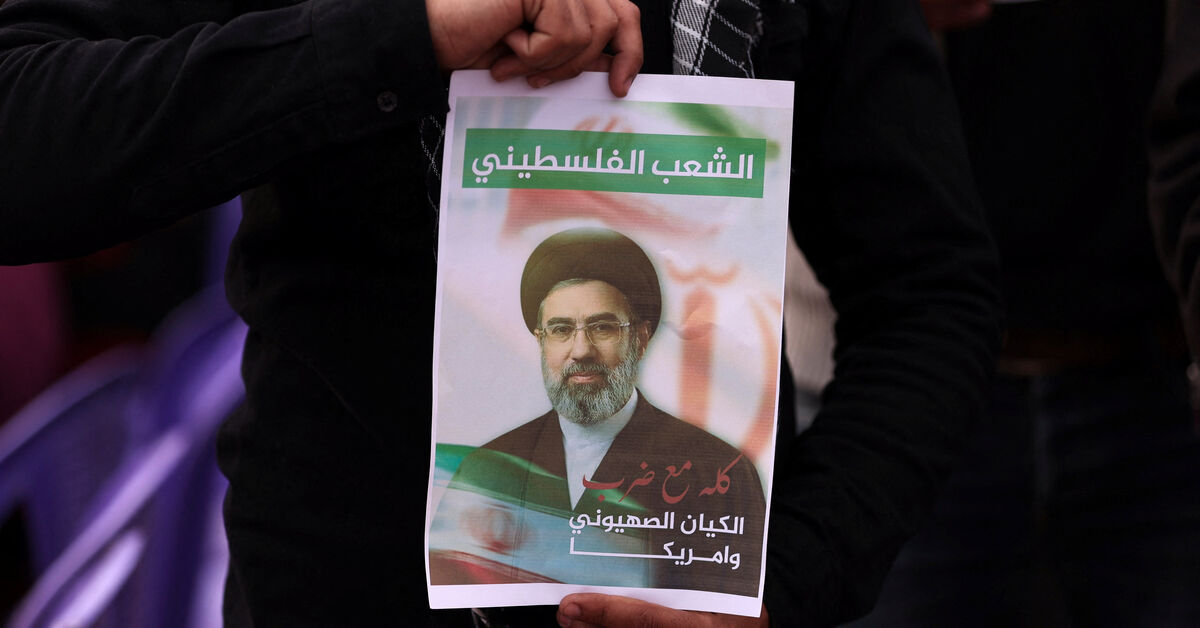
March 13 (Reuters) – The United States is offering a reward of up to $10 million for information about senior Iranian military and intelligence officials, including its new Supreme Leader, Ayatollah Mojtaba Khamenei.
The reward targets 10 officials associated with Iran’s Islamic Revolutionary Guard Corps (IRGC), according to the State Department website. The military force, created after Iran’s 1979 Islamic Revolution, is loyal to the supreme leader and tasked with protecting the Shi’ite clerical establishment.
Mojtaba Khamenei recently succeeded his father, Ali Khamenei, as Iran’s supreme leader after the elder Khamenei was killed along with several other top Iranian officials in joint U.S. and Israeli strikes that began on February 28. The younger Khamenei, believed to have been injured in the strikes, hasn’t been seen publicly since, although he released his first statement on Thursday.
In addition to the supreme leader, the U.S. is seeking information about Iran’s security chief Ali Larijani, Intelligence Minister Esmail Khatib, Interior Minister Eskandar Momeni and two officials in Khamenei’s office.
Larijani appeared Friday in videos verified by Reuters alongside President Masoud Pezeshkian and Foreign Minister Abbas Araqchi attending a rally in Tehran, despite an assertion by U.S. Defense Secretary Pete Hegseth that Iran’s leadership was “cowering” underground.
The reward website also lists four other officials, including the IRGC commander and secretary of the defense council, but doesn’t include their names or photos.
“These individuals command and direct various elements of the IRGC, which plans, organizes, and executes terrorism around the world,” the State Department said.
The Revolutionary Guards could not be immediately reached for comment on Friday — the weekly day of rest in Iran. Iran’s mission to the United Nations in New York didn’t immediately respond to a request for comment.
The U.S. has designated the IRGC as a foreign terrorist organization, accusing it of being responsible for attacks that have killed U.S. citizens. Washington has also accused Iran of orchestrating assassination plots against President Donald Trump and other U.S. officials in retaliation for the killing of Iranian military commander Qassem Soleimani in 2020.
Iran denies being a sponsor of terrorism. Iranian officials routinely dismiss U.S. terrorism allegations as baseless political attacks, arguing Washington raises such claims to justify pressure campaigns or sanctions.
(Reporting by Ryan Patrick Jones in Toronto; Editing by Ethan Smith)