
By Maggie Michael
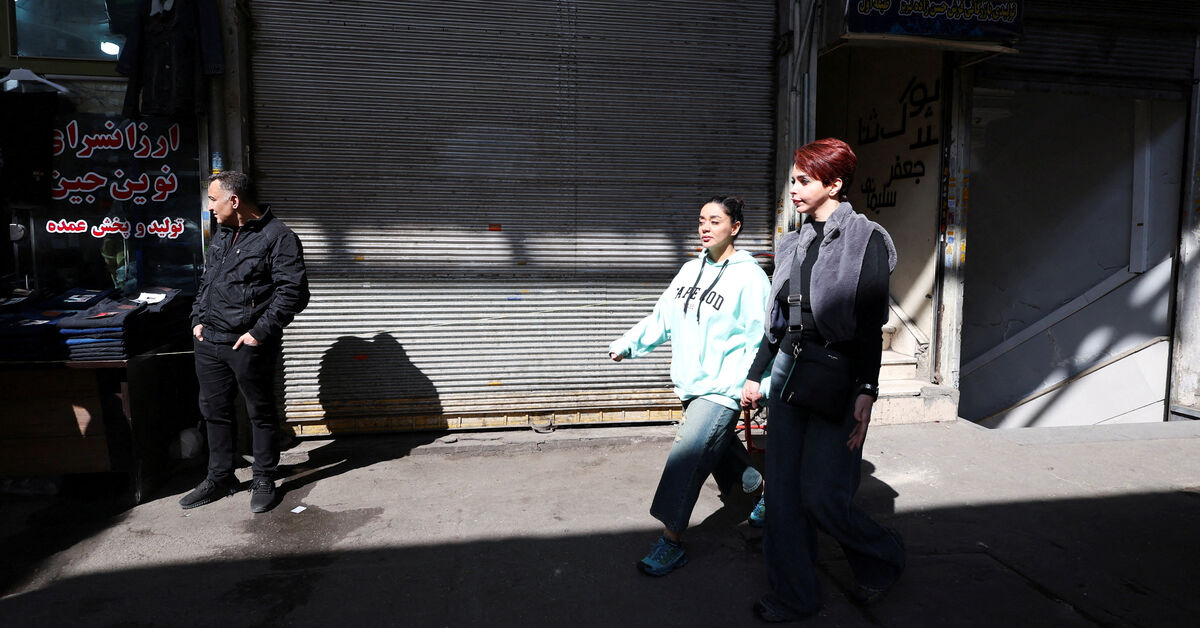
TEHRAN, March 18 (Reuters) – Nearly three weeks of war on Iran have hit the usually teeming alleys of Tehran’s grand bazaar, shutting many of the shops and driving up prices for Iranians already suffering from years of sanctions that have throttled the economy.
The days before the Persian new year and Muslim Eid al-Fitr holidays would normally fill the bazaar with traders racing to finalise deals and families shopping for gifts but, despite people browsing, fewer than usual were out buying on Wednesday.
“How can we afford to buy anything?” said Nisrin, 40, who only gave her first name, and who was scouring the few open clothes shops for new jeans for her two children.
Like most Iranians she has fond memories of bazaar trips before the Nowruz new year holiday when her mother would fill three shopping bags with clothes and gifts for her five children – now an unimaginable luxury even for middle-class families like hers.
With her salary of around $130 a month from working at a dental clinic, Nisrin had been able to afford some new clothes for the family on top of food and other necessities despite Iran’s economic problems that included soaring inflation.
Then the war came, she said.
Under heavy Israeli and U.S. bombardments that have killed the country’s supreme leader and many other senior figures, the government has issued no new figures on the economy since the assault began on February 28.
But while many businesses and government offices have stayed open, both traders and shoppers in the bazaar said the war has had a sharp economic impact and spoke of prices rising even higher than the 36% inflation rate that held for much of 2025.
BUSINESSES HURT
Sprawling across the centre of Tehran, the bazaar is a city within a city filled with both wholesalers and retail shops, its broad streets covered by towering brick vaults or corrugated iron, bright shafts of sunlight piercing the gloom below.
Divided into different areas for clothes, food, spices, carpets, electronics, ironmongery and a host of other categories, the bazaar has long been an economic mainstay for Tehran and its traders, an important political constituency.
The war has not only hurt business: some buildings have been physically damaged by airstrikes. “Danger, danger!” shouted a shopkeeper as people passed by, pointing to rubble from a fallen section of ceiling.
Pouria Rahbar-Yektashenais, who has owned a clothes shop for nearly 14 years, said his business had only just started recovering from a prolonged economic slump before the war began.
“Everything fell apart,” he said, adding that he had had to close again for two weeks, fearing the bazaar could be targeted in strikes, and had only just reopened his shop.
“Now you can see the situation,” he said, gesturing at the many still-closed shops nearby and the surrounding alleyways nearly empty of customers.
(Reporting by Maggie Michael; Writing by Angus McDowall; Editing by Howard Goller)