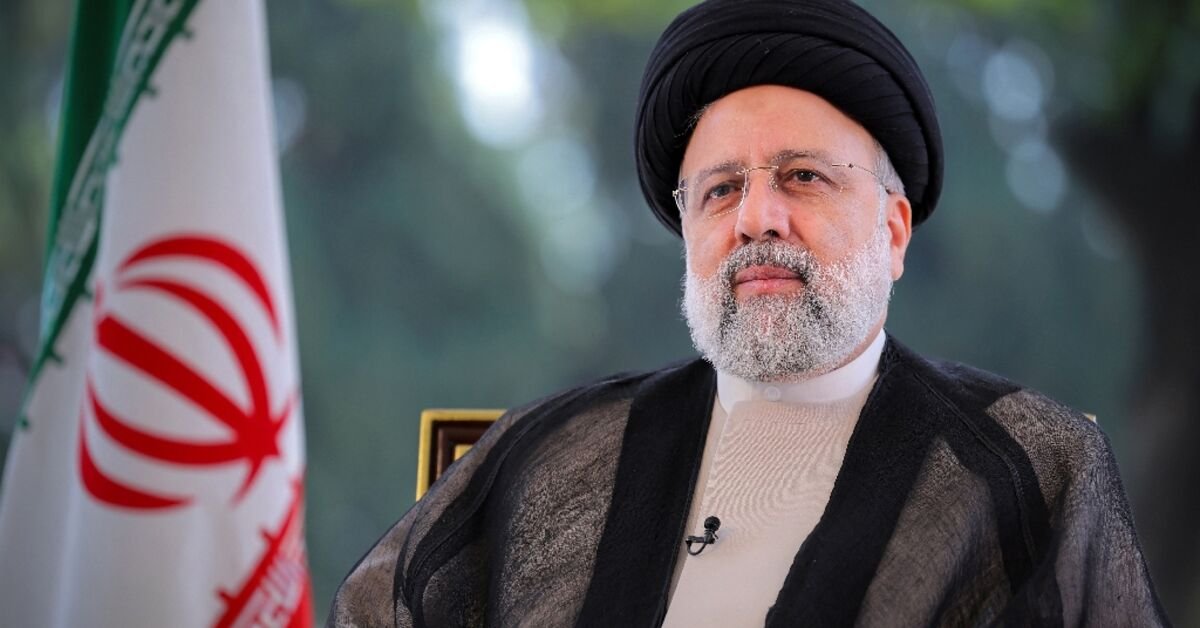

Iranian state media confirmed on Monday the death of President Ebrahim al-Raisi in a helicopter crash in a dense forest area in East Azerbaijan province in the northeast, after hours of search and rescue operations hampered by bad weather conditions.
Raisi, 63, along with other senior officials including Foreign Minister Hossein Amir-Abdollahian, were returning from the Khoda Afarin region after inaugurating a dam at the common border with Azerbaijan when their helicopter crashed on Sunday amid heavy fog and rain, according to Iranian state media.
Two other choppers carrying other officials and ministers that were part of the convoy landed safely.
Who was Raisi?
Raisi became Iran’s eighth president after winning the June 2021 elections, marked by the lowest electoral turnout since the Islamic Republic’s founding in 1979. Iran’s interior minister confirmed at the time that only 41% of the 61 million eligible voters, i.e. 25 million, cast their votes.
He assumed office in August 2021, succeeding relatively moderate President Hassan Rouhani.
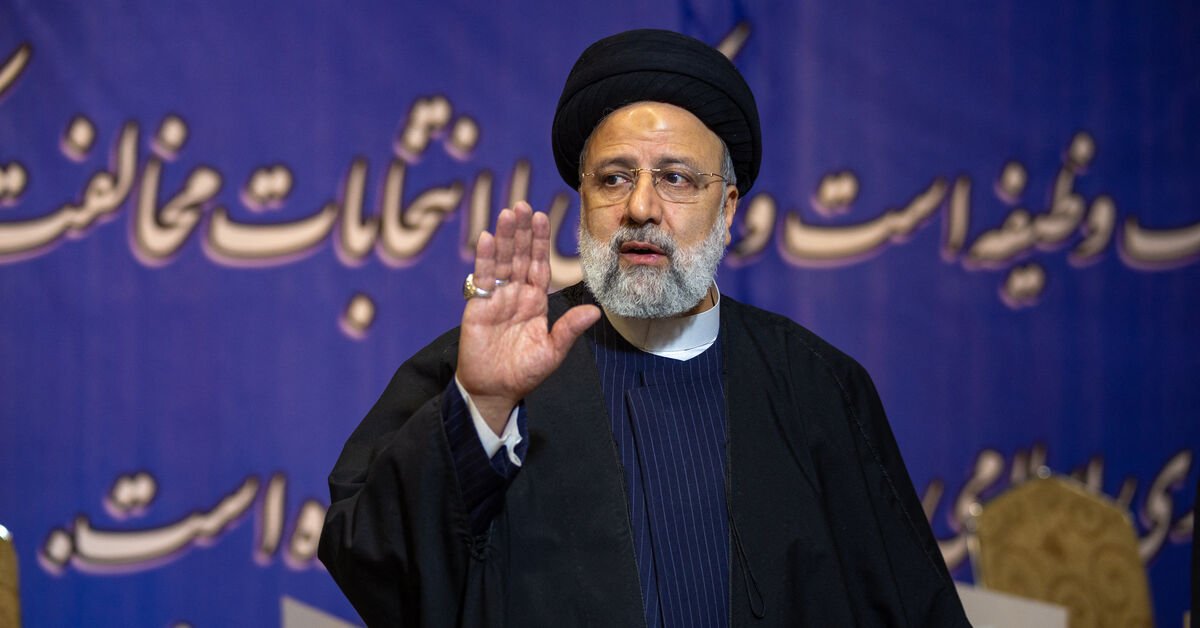
Raisi, who always wore a black turban to signify he is a descendent of Prophet Muhammad, was a hard-line cleric often seen defiant of the West and wed to conservative principles inside Iran. He often criticized Rouhani’s landmark 2015 nuclear deal struck with several world powers, including the United States. Under Raisi’s term, Iran has continued to enrich uranium to near-weapons-grade.
His rule was also marked by the massive protests that broke out in September 2022 following the death in custody of Mahsa Amini. The 22-year-old woman was arrested by the country’s morality police for allegedly violating the Islamic dress code.
The protests initially centered on women’s rights but subsequently broadened to encompass calls for the fall of the Islamic government. Iranian security authorities responded by launching a violent crackdown against protesters and activists, killing more than 500 people and arresting thousands of others between September 2022 and January 2023, according to the US-based Human Rights Activists News Agency.
This period also saw a spike in executions, with at least 834 people put to death in 2023 compared to 582 in 2022, according to Norway-based Iran Human Rights (IHR) and Paris-based Together Against the Death Penalty. So far this year, 226 people have been executed according to an IHR tally.
Raisi, who was close to Supreme leader Ayatollah Ali Khamanei, accused foreign actors of fomenting the 2022 unrest. “Following the failure of America in militarization and sanctions, Washington and its allies have resorted to the failed policy of destabilization,” Raisi said back in October 2022.
More recently, Raisi has backed Hamas’ surprise assault on southern Israel Oct. 7, which prompted the war in the Gaza Strip. Iran’s proxies in the region, including the Lebanese Hezbollah and Yemen’s Houthis, have since launched attacks against Israeli interests.
Last month, Raisi hailed Iran’s unprecedented attack on Israel and vowed a “massive and harsh” response at any Israeli retaliation. On April 13, the Islamic Revolutionary Guard Corps (IRGC) fired hundreds of drones and missiles at Israel, in retaliation for the suspected Israeli strike on its consulate in Damascus, which killed at least seven people, including two IRGC commanders.
Additionally, under his tenure, Iran reached a landmark deal, mediated by China, to normalize relations with Saudi Arabia after a seven-year rupture.
Raisi’s early life, career
Raisi was born on Dec. 14, 1960 in the Noghan district of the northeastern city of Mashhad. In 1983, he married Jamileh Alamolhoda, the daughter of ultraconservative Shiite cleric Ahmad Alamolhoda who has close ties to Khamenei.
The couple have two daughters.
Raisi received a religious education. At the age of 15, he attended a seminary in Qom, the center of Shiite learning. He later attended Shahid Motahari University in Tehran where he reportedly received a doctorate in Islamic jurisprudence and law, according to the Iranian presidential website. His educational background has often been contested by opponents.
The hardline president was also reportedly involved in the events of 1978–79 leading up to the Islamic Revolution that toppled the Western-backed shah.
In 1985, he was appointed deputy prosecutor in the country’s capital, Tehran. Later in 1988, Raisi was a member of a committee that oversaw the mass execution of thousands of political prisoners accused of collaborating with Iraq during the First Gulf War (Iran-Iraq war). In a 2022 report, Human Rights said it documented “overwhelming evidence” showing that the mass executions amounted to “crimes against humanity.”
In November 2019, the US imposed sanctions on Raisi for alleged human rights violations, including the 1988 executions.