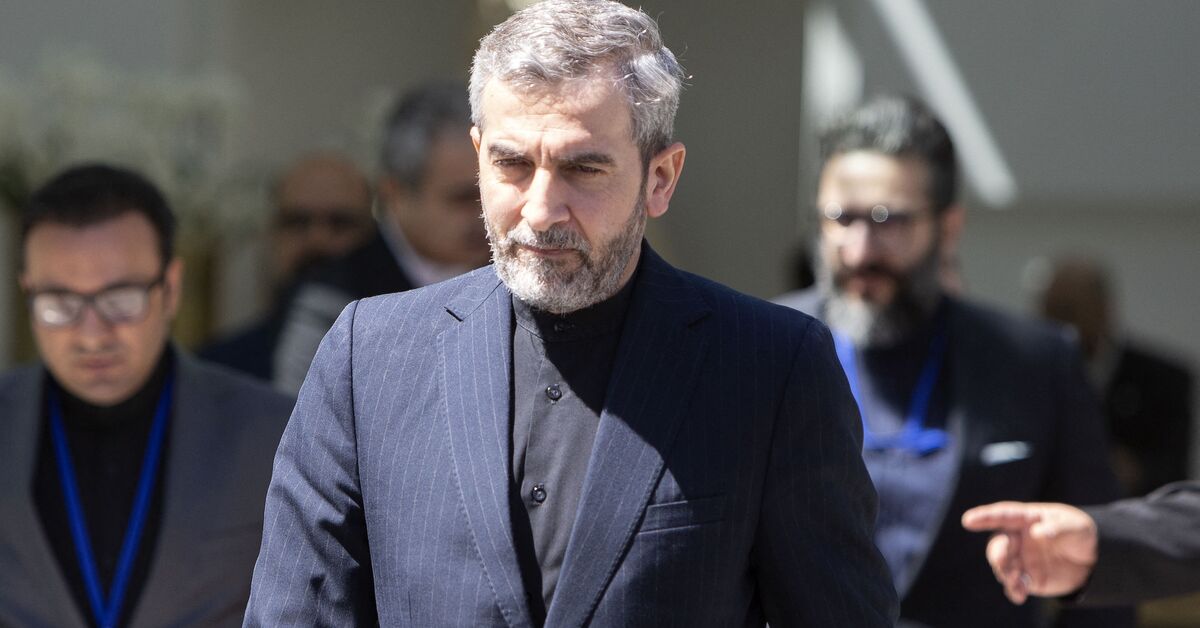

Acting Iranian Foreign Minister Ali Bagheri Kani on Thursday blamed Israel for the instability currently plaguing the region, adding that countries in the region must further strengthen cooperation to “build a safe and stable West Asia.”
Bagheri Kani made the remarks during a joint press conference with Iraqi Foreign Minister Fuad Hussein in Baghdad.
The Iranian diplomat arrived in neighboring Iraq on Thursday at the head of delegation for a two-day official visit, according to the official Islamic Republic News Agency.
Speaking alongside his Iraqi counterpart, Bagheri Kani warned Israel against escalating the current situation, stressing that Iran will not allow “Zionist aggressors to affect the stability and security of the region.”
On Israel’s ongoing war in Gaza, Bagheri Kani stressed the need to end “the genocide” against the Palestinian people, calling for the provision of aid to Gaza civilians without conditions.
On the current cease-fire talks, Bagheri Kani said the United States must stop providing Israel with weapons if it is serious about advancing a deal to bring an end to the war in Gaza and a prisoner and hostage swap.
He further said, “Iran and Iraq are two fundamental pillars in this region, and we have a shared responsibility to promote security, peace and stability.”
Meanwhile, Hussein stressed Iraq’s support for a permanent cease-fire in Gaza, warning of potentially dangerous escalations in the region, including on the Lebanese-Israeli border.
“The security situation in the region remains volatile,” he said, “and the entire region will be affected if Israel dares attack Lebanon.”
The Iraqi top diplomat also vowed to continue strengthening and developing Iranian-Iraqi relations in the economic, political and social sectors.
Bagheri Kani later held talks with Iraqi President Abdul Latif Rashid, Iran’s semi-official Mehr News Agency reported, without providing additional details. He is scheduled to travel to the Kurdistan Region of Iraq on Friday, where he will meet with Kurdish officials in Erbil.
Bagheri Kani, formerly Iran’s chief nuclear negotiator, was appointed acting foreign minister following the death of Foreign Minister Hossein Amir-Abdollahian in a helicopter crash last month in Iran alongside President Ebrahim Raisi and other officials. His visit to Iraq is part of a broader regional tour, which included stops in Lebanon and Syria last week, where he met with Hezbollah Secretary-General Hassan Nasrallah and Syrian President Bashar al-Assad. He also held meetings with other top officials and leaders of Iranian-backed groups.
The region is experiencing an extended period of heightened tensions since Oct. 7, when Hamas launched an unprecedented attack in southern Israel, and the Israelis responded with a relentless military assault in Gaza. Iran has backed Hamas in the conflict and supported its proxy allies Hezbollah and the Yemeni Houthis in launching strikes against Israel or Israeli targets in support of Hamas.
Iranian influence in Iraq
Iranian-backed groups in Iraq have also launched drone and missile attacks at US bases in Iraq and Syria in support of Hamas since last October.
Iran’s influence in neighboring Iraq has grown significantly in the last 20 years, beginning after the toppling in 2003 of President Saddam Hussein, a Sunni who led a violent crackdown against Iraq’s Shiite-majority population during his grip on power.
At least 10 Iraqi Shiite armed groups are currently believed to have ties to Shiite Iran, including Kataib Hezbollah and Asaib Ahl al-Haq, according to the Washington, DC–based Wilson Center.
Some Iraqi paramilitary groups that belong to the Popular Mobilization Forces, an umbrella of Iraqi militias that ostensibly reports to the Ministry of Defense, are heavily backed by Iran.
Also of note, Prime Minister Shia al-Sudani, who came to power in 2022, was nominated by the Coordination Framework, the ruling Shiite coalition of Iran-backed groups and paramilitary factions.